


The legend behind the world’s deadliest crocodile and why they’re trying to protect the species
How a feared predator became a symbol of cultural heritage and urgent conservation in the Philippines.
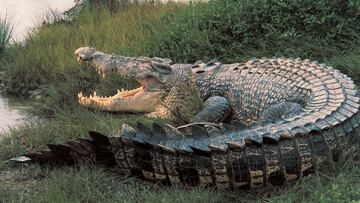

A simple mention of the word ‘crocodile’ is likely enough to strike fear into most, so putting the term ‘world’s deadliest’ in front of it will hardly help matters.
The Philippine crocodile: a rare and powerful predator
In case you’re wondering, though, the Philippine crocodile, technically named Crocodylus mindorensis, native to the Philippine archipelago, is the one you most want to avoid on your travels.
However, attempts are being made to save the species, which is critically endangered on the International Union for Conservation of Nature (IUCN) Red List, from going extinct.
Colonial myths transform revered crocodiles into monsters
Historically, the Philippine crocodile was widespread across the Philippines’ rivers, marshes, and forests, living in harmony with local communities who both feared and respected it. Indigenous Filipino groups saw the creature as a symbol of strength and a spiritual protector, with ancestral and mystical bonds, and therefore refrained from hunting it.
However, Spanish colonization of the islands (1565–1898) changed perceptions, with crocodiles becoming portrayed as bloodthirsty monsters that attacked people indiscriminately. While the crocodile is a powerful apex predator with strong jaws, sharp teeth, and stealthy hunting skills, capable of attacking and killing humans, documented examples of attacks were rare.
From abundance to near extinction
Near the turn of the 20th century, it is estimated there were around 10,000 of the species in existence. However, that number nosedived to approximately 100 by the early 1990s due to a number of factors, including habitat destruction from agriculture, mining, urbanization, logging, and overfishing, as well as hunting driven by fear, sport, meat, and skin trade. By the 2000s, only about 20 wild individuals were confirmed in isolated areas.
Critical efforts to save a vanishing species
As a result, the Philippine crocodile was classed as critically endangered on the IUCN Red List, and the Philippine Crocodile National Recovery Team was formed to save the species, with efforts made to change the perception of crocodiles in the country.
Conservationists introduced community education campaigns aiming to restore respect for the animals, challenge fear-based views, and highlight the crocodile as a symbol of pride and environmental health.
Ecosystem and community benefits
But it hasn’t just been about saving the creatures themselves. Restoring ecosystem balance and supporting indigenous traditions and local livelihoods are other important reasons for protecting the species.
Captive breeding programs started in 1981 and have since bred hundreds of baby crocodiles for reintroduction. While many early attempts failed, more recent efforts by organizations like Crocodylus Porosus Philippines and the Mabuwaya Foundation have seen better survival rates, with captive-bred crocodiles now successfully released into protected habitats where they are beginning to reproduce in the wild, where they currently number 125.
Related stories
Get your game on! Whether you’re into NFL touchdowns, NBA buzzer-beaters, world-class soccer goals, or MLB home runs, our app has it all.
Dive into live coverage, expert insights, breaking news, exclusive videos, and more – plus, stay updated on the latest in current affairs and entertainment. Download now for all-access coverage, right at your fingertips – anytime, anywhere.
Complete your personal details to comment