


The New START Treaty ends today: What now for the nuclear arms agreement between Russia and the U.S.?
Implemented in 2011, this last remaining pact on atomic arsenals between Russia and the United States is raising concerns of a new arms race.
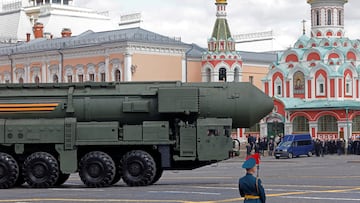

The world woke up to a new reality on Thursday morning, one in which neither the United States or Russia is constrained by limits on the number of nuclear warheads they can field or possess. That’s because the treaty that capped both countries’ atomic arsenals, New START, expired when the clock hit midnight in Prague where it was signed in 2010.
This will mark the first time in over half a century that there will be no constraints on the two countries’ nuclear arsenals, both of which already have stockpiles that dwarf all others. There are concerns that by letting the treaty lapse without a successor agreement, a new nuclear arms race may ensue between Moscow and Washington.
This would most likely have further ramifications, leading to greater global instability and a heightened risk of a nuclear weapon being used. This was one of the reasons behind the Bulletin of the Atomic Scientists moving the ‘Doomsday Clock’ to just 85 seconds to midnight, the closest it ever has been in history.
If Congress doesn’t act, the last nuclear arms control treaty between the U.S. and Russia will expire. It would pointlessly wipe out decades of diplomacy, and could spark another arms race that makes the world less safe. This piece is worth the read. https://t.co/NPtKyjYRml
— Barack Obama (@BarackObama) February 2, 2026
The New START treaty
Under New START, the U.S. and Russia were limited to having deployed and ready to use no more than 1,550 nuclear warheads on a maximum of 700 delivery systems, submarine-launched and intercontinental ballistic missiles as well as bombers. It also established 18 short-notice, on-site inspections to verify compliance and an exchange of data between the two countries twice a year.
However, the later portion of the treaty had broken down in recent years, starting during the covid-19 pandemic. Russia’s invasion of Ukraine and NATO support for Kyvi further hampered resumption of the inspections.
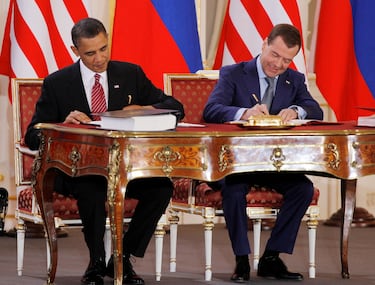
Both Russian and the U.S. were open to an extension
President Donald Trump had indicated that he thought the idea of New Start expiring was not a good idea. He said: “When you take off nuclear restrictions, that’s a big problem for the world.” However, Trump wants China, which has been rapidly building up its own nuclear capabilities, to be included in any new agreement as well.
Russian President Vladimir Putin said that his nation was open to a one-year extension of the limits on nuclear arsenals laid out in the treaty, to which Trump said, “sounds like a good idea to me.” Although Trump told The New York Times during an interview in January: “If it expires, it expires,” adding, “We’ll do a better agreement.”
Currently, there are no ongoing negotiations between the two to find a successor agreement to control either nation’s nuclear arsenals.
Related stories

Get your game on! Whether you’re into NFL touchdowns, NBA buzzer-beaters, world-class soccer goals, or MLB home runs, our app has it all.
Dive into live coverage, expert insights, breaking news, exclusive videos, and more – plus, stay updated on the latest in current affairs and entertainment. Download now for all-access coverage, right at your fingertips – anytime, anywhere.
Complete your personal details to comment