


The North and South Korea split explained: How the nation was divided by the 38th parallel into two separate countries
The 38th parallel, latitude 38° N, is the line that demarcates North Korea and South Korea. The division was hastily drawn up after WW II.
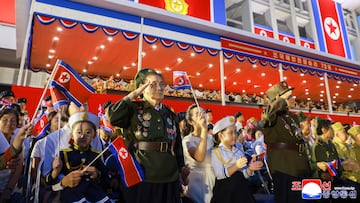
From the ancient kingdom of Gojoseon to the Goryeo Empire and beyond, the Korean peninsula has had a rich and varied history. Evidence dates the first settlers to the Paleolithic Age, over half a million years ago, and fast forward to today, what was once a unified nation is now split into two: the Democratic People’s Republic of Korea(DPRK) occupying the north part and the Republic of Korea, the southern part.
The division is relatively recent and was originally meant only as a temporary measure. It’s a long and complex story so we’ll try and summarize how North and South Korea came to be separate nations as simply as possible.
Korea annexed and ruled by Japan
In the modern era, i.e. during the last century, Korea has been under different rule during four separate stages. The colonial period, when the country was annexed was ruled by the Empire of Japan, lasted from 1910 until the end of the Second World War. The country was renamed Chōsen, Korean language was banned and nationals were forced to worship Japanese emperors (Taishō 1910-1926, Shōwa 1926-1945) and millions had to take Japanese names.
Korea, or more specifically Joseon (Japanese: Chōsen) as it was called, should have gained independence following Japan’s defeat and surrender in the WWII. Fearing the advancing Soviet Union forces would take the peninsula, the US government proposed dividing the country into two parts, roughly in the middle at the 38th parallel north line of latitude.
The split was agreed by the Soviets and satellite governments were installed in the occupied north and south territories. It was initially meant to be a temporary solution, with Korea gaining independence after a five-year trusteeship but division between the two sides grew with the advent of the Cold War.
On this day in 1950, the Korean War began.
— U.S. Army (@USArmy) June 25, 2025
North Korean forces crossed the 38th Parallel, launching a full-scale invasion of South Korea.
This marked the start of a brutal three-year conflict that shaped the future of the Korean Peninsula.
🎥 Watch how the war unfolded. pic.twitter.com/nITakmj3fw
Any hopes of a reunified Korea were dashed for good when the north and south went to war with each other in the Korean War (25 June 1950 – 27 July 1953) - essentially a three-year proxy conflict which ended in a stalemate, with millions of casualties.
Korea’s demilitarized zone
Today North and South Korea is separated by a militarized border known as the Demilitarized Zone (DMZ). It has a small meeting point: Joint Security Area (JSA) in the village of Panmunjom, where leaders of both states can sit down for negotiations, although this rarely happens - North Korean leader Kim Jong Un and his South Korea counterpart President Moon Jae-in met at the Peace House in April 2018.
BREAKING: President Trump meets Kim Jong Un in the DMZ. https://t.co/FtT6leBRIX pic.twitter.com/ZJ1QI9snYg
— NBC News (@NBCNews) June 30, 2019
Little over a year later, in June 2019, north and south leaders were back at the JSA to host Donald Trump, the first US president to enter North Korea via the DMZ.
Related stories
Get your game on! Whether you’re into NFL touchdowns, NBA buzzer-beaters, world-class soccer goals, or MLB home runs, our app has it all.
Dive into live coverage, expert insights, breaking news, exclusive videos, and more – plus, stay updated on the latest in current affairs and entertainment. Download now for all-access coverage, right at your fingertips – anytime, anywhere.
Complete your personal details to comment