


The planet that shouldn’t exist: astronomers discover a sulfurous hell that breaks all the rules
This discovery, located 35 light-years away, presents characteristics that contradict all known planetary models.
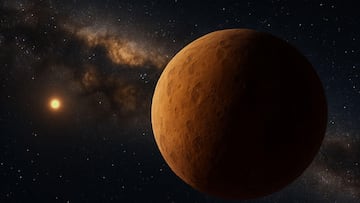
A group of astronomers from the University of Oxford were astonished to discover a new planet described as “impossible.” The object, identified as L 98-59d, displays a series of unusual characteristics that some researchers say “should not exist.” It was detected by the James Webb Space Telescope, which has already been responsible for a number of major discoveries.
The planet lies 35 light-years from our solar system and is part of a planetary system orbiting a red dwarf star. While that may sound remarkable, it is actually fairly common. What has truly captured astronomers’ attention is its composition.
According to data collected by the James Webb Space Telescope, gases rich in sulfur have been detected in its atmosphere, including compounds such as hydrogen sulfide. This composition is extremely rare among rocky planets identified so far.
An ocean of magma
The scientists leading the research suggest that beneath its surface there may be an ocean of magma, a layer of molten rock that could act as a reservoir of sulfur. They also highlighted the planet’s low density. Despite being 1.6 times the size of Earth, it has a lower density than expected for a rocky world. This contradicts current models, which predict that planets of this size should be denser and have more substantial cores.
Harrison Nicholls and colleagues suggest that exoplanet L 98-59 d could be entirely composed of molten lava: a magma ocean covering a mushy core. https://t.co/xoZ29Pgpdg
— Nature Astronomy (@NatureAstronomy) March 16, 2026
Some researchers noted that this alien world should not exist under our current theories, and expressed their surprise at a discovery that may point to a type of planet not yet understood.
Until now, astronomers have been able to classify exoplanets into fairly clear groups, such as large rocky planets, smaller Neptune-like worlds, or gas giants.
However, this object does not fit into any of those categories. This suggests that not all planets follow established models. If confirmed, the finding would imply that many unknown worlds still exist, ones that do not align with current theories of planetary formation and composition.
Related stories
Get closer to the game! Whether you like your soccer of the European variety or that on this side of the pond, our AS USA app has it all. Dive into live coverage, expert insights, breaking news, exclusive videos, and more. Plus, stay updated on NFL, NBA and all other big sports stories as well as the latest in current affairs and entertainment. Download now for all-access coverage, right at your fingertips – anytime, anywhere.
And there’s more: check out our TikTok and Instagram reels for bite-sized visual takes on all the biggest soccer news and insights.
Complete your personal details to comment