


The reason why trees are growing and expanding in Yellowstone is thanks to the return of this ferocious predator
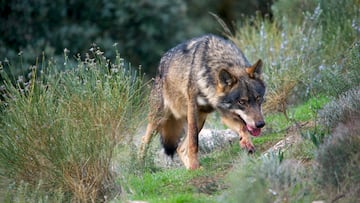
These territorial canines, who live and hunt in packs, were reintroduced to the national park 30 years ago. It’s good news for the park’s quaking aspen.
Quaking aspen (Populus tremuloides to give it its binomial name), a deciduous tree native to Yellowstone National Park’s northern range is enjoying a resurgence - all thanks to an unlikely wild predator.
Clusters of quaking aspen can be found dotted across a large, 250,000-acre area encompassing the valleys of Yellowstone, Lamar, and Gardner rivers, happily coexisting with lodgepole pines, spruce and fir trees.
The simple joys of autumn - quaking aspen rustling in the wind in Yellowstone's Northern Range. pic.twitter.com/j8LsRClTCP
— ynpforever (@ynpforever) October 2, 2023
Quaking aspen saplings stripped before they can grow
Yet, these fast-growing trees with their distinctive, shimmering leaves have fallen prey to a number of invasive species. Apart from having to protect themselves from parasites, fungi and other pests, the quaking aspen fight a continual battle with beavers and elk, who strip off the smooth grey bark with their front teeth, leaving the trees vulnerable to the elements and disease...
Researchers discovered that the beavers target the older trees and the elk focus on the younger saplings. Despite being a fast-growing, diecious species (individual trees are either male or female), aspen numbers started to fall dramatically in the early 1990s.
Have you ever heard this sound while visiting the park?
— Yellowstone National Park (@YellowstoneNPS) September 17, 2024
If you have, you witnessed the bugle of a bull elk during their rut or mating season! pic.twitter.com/N3yoQeJTvg
The reason for that was the growing elk population. An estimated 18,000 elk roamed the park by the end of the 1980s - feeding off the twigs and bark of young aspen saplings. By the start of the new decade, there were practically no aspen saplings to be found - all had died before having a chance to establish themselves.
In a bid to re-set the park’s ecosystem, gray wolves were reintroduced to the park to help control the numbers of aspen-munching elk. In January 1995, eight gray wolves from Jasper National Park in Alberta, Canada were released into the Yellowstone wilds - the first time wolves had been present in the park since the last pack was killed in 1926. By the end of 1996, their numbers had risen to 31.
To entice the wolves and ensure they stayed inside the park, elk carcasses were left for the packs to feed on. While one pack decided to head north for Montana, the female, pregnant with eight pups was caught and returned to Yellowstone.
Wolves devouring Yellowstone’s elk
Over the course of the next two decades, the wolves brought the elk population down. During the summer months, there are an estimated 10,000–20,000 elk from six to seven herds in or close to the park, but only around 2,000 in the northern range with its aspen, now protected by the relocated gray wolves.
As for the wolves, their numbers have fluctuated between 83 and 123 over the past 15 years. According to government figures, there were at least 97 wolves in eight packs, including six breeding pairs, living primarily in Yellowstone during the most recent census in December 2021.
Related stories
Get your game on! Whether you’re into NFL touchdowns, NBA buzzer-beaters, world-class soccer goals, or MLB home runs, our app has it all.
Dive into live coverage, expert insights, breaking news, exclusive videos, and more – plus, stay updated on the latest in current affairs and entertainment. Download now for all-access coverage, right at your fingertips – anytime, anywhere.
Complete your personal details to comment