


The Streisand effect and how CBS censorship of Rep. James Talarico was a win-win for him and Stephen Colbert’s ‘The Late Show’
A senatorial candidate who threatens to turn Texas blue was censored on Colbert’s late-night show, but that had the opposite of the intended effect.
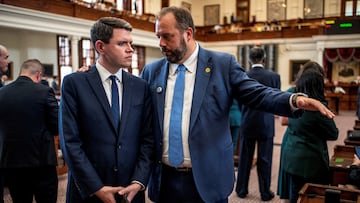

If you want to make a little-known candidate famous, apparently the fastest way is to try to silence him.
When CBS declined to air Stephen Colbert’s interview with Texas Democratic Senate candidate James Talarico, citing concerns over the FCC’s revived “equal time” rule, they didn’t bury the segment. They made it explode.
Instead of disappearing into late-night obscurity, Talarico’s interview went viral online. And in the process, both the 36-year-old state representative and Colbert benefited from what may be the cleanest modern example of the Streisand Effect in cable-era politics.
The classic Streisand effect
The term “Streisand Effect” dates back to 2003, when Barbra Streisand sued a photographer for $50 million over an aerial photo of her Malibu home. Before the lawsuit, the image had been downloaded a handful of times. And after the lawsuit, it had hundreds of thousands of downloads. The attempt to suppress the image only amplified it.
That same dynamic appears to be playing out here. Colbert told his studio audience that CBS lawyers informed him the interview could not air on broadcast television, and that he couldn’t even mention the reason. So he did exactly what any savvy late-night host would do. He talked about it on air and posted the interview online.
In turn, the interview saw a surge of attention that traditional airtime may never have delivered.
The numbers tell the story
According to Google Trends data from the past 24 hours, searches for “James Talarico” nationally were five times higher than searches for Rep. Jasmine Crockett, his main Democratic rival in the Texas Senate primary.
That is a significant number. As recently as late January, polling showed Crockett leading Talarico 38% to 37% among Democratic primary voters, effectively a statistical tie. And the key weakness in Talarico’s campaign was visibility.
Polling showed 35% of voters said they had not heard from Talarico or his campaign at all, and 27% said they did not know who he was. By contrast, only 15% said they didn’t know Crockett.
Talarico’s biggest liability wasn’t his ideology, but lack of name recognition. CBS seems to have just solved that for him.
The “equal-time” debate
CBS issued a statement insisting the interview was not “prohibited,” but that airing it could trigger the FCC’s 1934 equal-time rule, requiring similar opportunities for other candidates, including Crockett.
Under previous administrations, late-night talk shows were generally treated as “bona fide news” programming and exempt from strict equal-time enforcement. FCC Chairman Brendan Carr has suggested that exemption may no longer apply if shows are used for partisan purposes. That’s the legal debate.
But politically, it’s much simpler. We have a rising Democratic Senate candidate told he can’t appear on a late-night show due to regulatory pressure during a Trump-aligned FCC’s renewed enforcement push. Whether one believes this is neutral legal guidance or partisan intimidation, the effect is the same. It got attention.
The irony is that many viewers admitted online they wouldn’t have watched the interview if it had simply aired normally. Colbert leaned in, openly defying what he described as pressure to remain silent. The clip discussing the censorship, along with the full YouTube interview, quickly outperformed his previous nine uploads.
Both Talarico and Colbert benefited from this. Talarico gained national name recognition at a critical moment in a tight primary, and Colbert gained a viral moment and reinforced his brand as a combative political commentator. CBS, meanwhile, sparked a debate about media independence, FCC authority, and the politicization of regulatory enforcement.
The bigger political impact
Whoever wins the Democratic primary will face a formidable Republican opponent in Texas, whether it’s incumbent Sen. John Cornyn, Attorney General Ken Paxton, or Rep. Wesley Hunt.
But primaries are often decided by momentum, enthusiasm, and visibility. When a candidate’s biggest structural weakness is lack of exposure, a viral censorship controversy can function as a political accelerant. And that’s the heart of the Streisand Effect. Suppression becomes promotion.
If CBS had simply aired the interview, it might have been another segment in a crowded late-night cycle. Instead, it became a national political story, one that positioned Talarico as a target of federal scrutiny and a beneficiary of viral outrage.
Sometimes, censorship doesn’t work to silence. Instead, it shines a spotlight. And in this case, it may have reshaped a Senate primary overnight.
Related stories

Get your game on! Whether you’re into NFL touchdowns, NBA buzzer-beaters, world-class soccer goals, or MLB home runs, our app has it all.
Dive into live coverage, expert insights, breaking news, exclusive videos, and more – plus, stay updated on the latest in current affairs and entertainment. Download now for all-access coverage, right at your fingertips – anytime, anywhere.
Complete your personal details to comment