


The ‘trio’ of countries that have the cheapest gasoline and diesel in the world: they share a tense historical relationship with the US
Venezuela, Iran, and Libya not only share enormous oil reserves, but also a historically conflictive relationship, a coincidence that is not accidental.
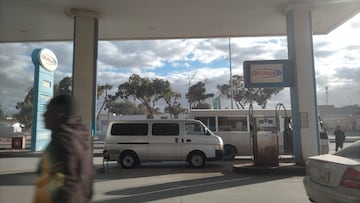
On the global energy chessboard, one fact stands out. The three countries with the cheapest diesel prices in the world, Venezuela, Iran, and Libya, not only possess enormous oil reserves, but also maintain historically strained relations with the United States. This overlap is no coincidence. Behind the symbolic fuel prices lies a political and economic framework that turns oil into a tool of power, resistance, and domestic legitimacy.
International diesel price data, shown below using this week’s figures from Global Petrol Prices, consistently place these three countries at the very bottom of the global ranking, far below market levels.
- Venezuela: $0.004 per liter ($0.015 per gallon)
- Iran: $0.006 per liter ($0.023 per gallon)
- Libya: $0.028 per liter ($0.11 per gallon)
In the context of the global energy transition, these countries face a dilemma: preserve their rent-based economic model or adapt to a world in which oil will gradually lose its strategic importance. For now, ultra-cheap fuel remains their most visible card on the geopolitical board.
In all three cases, low fuel prices are not an isolated benefit, but part of an economic model built on oil rents. The state controls production, sets prices, and uses subsidies as a mechanism of social cohesion.
Venezuela
- Maintains the lowest fuel price in the world, effectively free.
- The extreme subsidy is a historic symbol of the “oil nation,” although today it creates severe distortions in an economy battered by inflation and declining production.
- The oil industry, weakened by sanctions and lack of investment, relies on partnerships with actors such as Russia, China, and Iran.
Iran
- Cheap fuel is part of the regime’s social contract.
- U.S. sanctions have reinforced the narrative of energy self-sufficiency.
- The state uses low prices as a buffer against internal unrest and as a tool to support strategic sectors.
Libya
- Despite political fragmentation, the country maintains very low prices thanks to its reserves and the need to stabilize a divided nation.
- Oil remains the only economic glue holding together a territory governed by multiple de facto authorities.
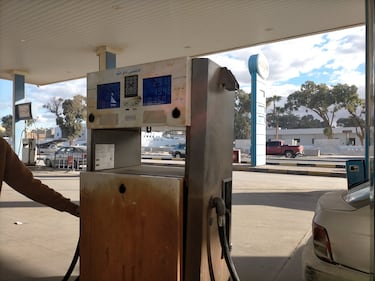
Fuel as a tool of legitimacy
In these countries, diesel prices are not merely an economic decision, but a political instrument. Subsidies are preserved as a mechanism of social control. Keeping fuel cheap helps prevent protests and sustains the narrative that the state protects its population.
Oil is also framed as a symbol of sovereignty. Cutting subsidies would be seen as yielding to external pressure, especially in contexts shaped by sanctions. Fuel thus becomes a form of diplomatic currency, as energy agreements with strategic allies help bypass financial or trade restrictions.
A tense relationship with the United States: sanctions, rivalries, and strategies of resistance
At different points in time, all three countries have experienced direct or indirect conflict with Washington.
- Venezuela: Economic sanctions, political disputes, and a long history of ideological confrontation.
- Iran: Decades of sanctions, nuclear tensions, and regional rivalry.
- Libya: Periods of confrontation during the Gaddafi era and an ambivalent relationship after his fall.
These tensions have reinforced the decision to keep domestic fuel prices artificially low. For these governments, subsidies are not simply an expense, but a political statement in response to international pressure.
In the context of the energy transition, the dilemma remains the same: maintain a rent-based model or adjust to a future in which oil carries less strategic weight. For now, cheap fuel remains their most visible geopolitical asset.
Oil as a geopolitical weapon
Control over oil gives these countries room to maneuver that others lack.
- They can partially decouple from global markets by setting domestic prices independent of international crude costs.
- They use oil as a bargaining tool to secure diplomatic support or attract investment from non-Western allies.
- They maintain regional influence, particularly Iran in the Middle East and Venezuela in Latin America.
In a world where energy remains a key source of power, these countries have turned their most valuable resource into a political shield.
What does this “trio” reveal about the future of global energy?
The cases of Venezuela, Iran, and Libya show that fuel prices can be as much a political indicator as an economic one. Massive subsidies are sustainable only in countries with large reserves and strong state control over the energy sector. They also demonstrate that tensions with the United States shape not only diplomacy, but the internal structure of energy markets. Oil continues to serve as a tool of resistance for governments under international pressure.
List of countries with the cheapest diesel this week
| Country | Diesel price per dollar/liter | Gasoline price in dollars per liter |
|---|---|---|
| Venezuela | 0.004 | 0.035 |
| Iran | 0.006 | 0.029 |
| Libya | 0.028 | 0.028 |
| Algeria | 0.239 | 0.362 |
| Turkmenistan | 0.285 | 0.428 |
| Egypt | 0.369 | 0.442 |
| Kuwait | 0.374 | 0.341 |
| Angola | 0.437 | 0.328 |
| Saudi Arabia | 0.477 | 0.621 |
| Bahrain | 0.530 | 0.623 |
| Qatar | 0.549 | 0.549 |
| Kazakhstan | 0.572 | 0.482 |
| Syria | 0.605 | 0.735 |
| Lebanon | 0.634 | 0.673 |
| Nigeria | 0.641 | 0.536 |
| Azerbaijan | 0.647 | 0.676 |
| Trinidad and Tobago | 0.651 | 1.145 |
| Sudan | 0.656 | 0.700 |
| Vietnam | 0.664 | 0.735 |
| Oman | 0.671 | 0.622 |
Related stories
Get your game on! Whether you’re into NFL touchdowns, NBA buzzer-beaters, world-class soccer goals, or MLB home runs, our app has it all.
Dive into live coverage, expert insights, breaking news, exclusive videos, and more – plus, stay updated on the latest in current affairs and entertainment. Download now for all-access coverage, right at your fingertips – anytime, anywhere.
Complete your personal details to comment