


The world’s most powerful offshore wind turbine just switched on in China — but scientists are alarmed by what came next
The 20-megawatt giant can power nearly 100,000 homes a year, yet its sheer size may be reshaping the local climate.
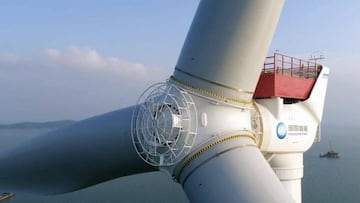
China has just activated the world’s largest offshore wind turbine — a colossal machine standing 794 feet tall (242 meters) with blades longer than a football field. Built by the clean-energy company Mingyang Smart Energy, the turbine is located off the coast of Hainan Province in the South China Sea.
Its scale is staggering: each of its three blades measures 420 feet (128 meters), sweeping an area larger than two soccer fields combined. Designed to withstand hurricane-force winds of nearly 180 mph, the 20-megawatt turbine is capable of generating enough electricity to power around 96,000 households every year.
But researchers have noticed something unexpected. The turbine’s activation appears to be altering the local microclimate. While it’s known that wind farms can shift airflow patterns, scientists say the unprecedented size of this new installation could be amplifying those effects — raising urgent questions about how mega-turbines might impact regional weather systems.
Why Hainan?
The South China Sea location was chosen carefully. Offshore winds here are steady, powerful, and ideal for maximizing efficiency. The deep-water site also allows the turbine to operate far from the continental shelf, where conditions are less turbulent.
These factors make Hainan a prime testing ground for large-scale renewable energy projects. According to a report by EcoNews, the turbine officially went online on August 28, 2024, marking a milestone in global renewable energy development.
A leap for wind power
Each rotation of the blades captures more energy than any turbine before it. By scaling up capacity, engineers hope to reduce the number of turbines needed to supply the same amount of power — a shift that could cut costs and lower the environmental footprint of offshore wind farms.
The 20-megawatt design is seen as a breakthrough for the industry, signaling how wind power could one day rival fossil fuels in providing electricity at a global scale.
The hidden challenge: protecting ecosystems
Yet the benefits come with caution. Local ecosystems — especially ocean temperatures and wind-driven weather patterns — could face unforeseen consequences if turbines this massive disrupt the natural balance.
Scientists stress the importance of ongoing monitoring to ensure that the race toward clean energy doesn’t unintentionally spark new environmental challenges.
Related stories
Get your game on! Whether you’re into NFL touchdowns, NBA buzzer-beaters, world-class soccer goals, or MLB home runs, our app has it all.
Dive into live coverage, expert insights, breaking news, exclusive videos, and more – plus, stay updated on the latest in current affairs and entertainment. Download now for all-access coverage, right at your fingertips – anytime, anywhere.
Complete your personal details to comment