


These are the reasons why the Roman Empire fell and how history could repeat itself
Between 98-117 AD, the Roman Empire stretched from Europe, Asia Minor and North Africa reaching its maximum size of roughly 5 million square kilometers.
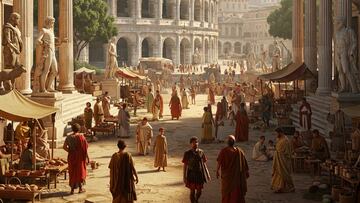
The Roman Empire’s immense power and longevity were a result of a multifaceted combination of military prowess, sophisticated political and administrative systems, robust economic foundations, and impressive infrastructure.
Rome transitioned from a monarchy to a Republic with elected magistrates and a powerful Senate, and then to an Empire under an Emperor. This evolution, while sometimes tumultuous, provided a framework for governance.
Conquests brought immense wealth through plunder, tributes, taxes, and control over vital resources (like fertile agricultural land, mines, and trade routes) as trade networks facilitated extensive trade networks by land and sea across the Mediterranean and beyond. This allowed for the movement of goods, ideas, and wealth, contributing to economic prosperity.
At its height in 117 AD, the Roman Empire covered 40 modern nations and 5 million square km. Sea crossings aside, you could walk from northern Britain to the Persian Gulf and have never left the Roman Empire - some 3,500 miles
— Ancient History Hit (@AncientsHH) October 26, 2019
Credit: Tataryn / Commons. pic.twitter.com/IdaslPy7Qn
Downfall
The decline and eventual “fall” of the Western Roman Empire in 476 CE was not due to a single event, but rather a series of factors that gradually weakened it over centuries.
The Empire faced relentless pressure from various Germanic tribes (Goths, Vandals, Franks, Lombards, etc.) on its borders, often pushed by the arrival of the Huns from the east. The vast frontiers required an enormous standing army, straining resources and manpower.
Constant warfare and maintaining a massive empire led to exorbitant military spending. To fund this, emperors often debased the currency (reducing the precious metal content of coins), leading to rampant inflation and a loss of public confidence in the economy.
The Forum of Julius Caesar in Rome. Artist: C.R Cockerell. British 1788-1863. watercolor. pic.twitter.com/p4pWAocKUG
— Archaeology & Art (@archaeologyart) April 5, 2020
Leadership instability was another key factor in the decline of the regime as the years (235-284 CE) saw over 20 emperors in 50 years, many of whom met violent ends. This constant turmoil created chronic instability, power struggles, and civil wars, weakening central authority.
Worsening conditions for subjects saw many losing faith in the state and their leaders and ultimately the Roman Empire was simply too vast to govern and defend effectively. Communication and transportation across such a huge territory were slow, making quick responses to threats or rebellions challenging. This overstretch strained resources and administrative capacity.
Western world or USA?
Many individuals make parallels between the Roman Empire and the modern world and historians are always keen to issue caution against simplistic comparisons.
Modern societies are vastly different from ancient Rome in many ways (e.g., technology, global interconnectedness, democratic structures) but at the same time the Roman Empire’s decline remains a compelling historical case study for understanding the vulnerabilities and challenges that can affect powerful civilizations.
Related stories
Get your game on! Whether you’re into NFL touchdowns, NBA buzzer-beaters, world-class soccer goals, or MLB home runs, our app has it all.
Dive into live coverage, expert insights, breaking news, exclusive videos, and more – plus, stay updated on the latest in current affairs and entertainment. Download now for all-access coverage, right at your fingertips – anytime, anywhere.
Complete your personal details to comment