


These gorillas rescued from traffickers were returned to their home and scientists were amazed by what happened
To the delight of conservationists, four gorillas found a new home alongside a pack of silverbacks after being rescued from traffickers.
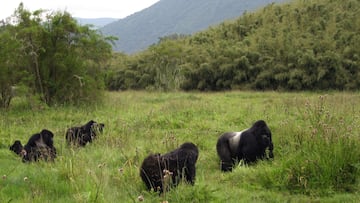

In a major conservation victory, a group of rescued Grauer’s gorillas released into Virunga National Park last October has defied expectations, leaving researchers both relieved and hopeful after this rapid reintroduction into their natural habitat. The Grauer’s gorilla, also known as the Eastern lowland gorilla, is critically endangered due to poaching and illegal logging, which continue to threaten the species’ habitat.
“The best candidates for reintroduction”
The group, four female gorillas named Isangi, Lulingu, Mapendo, and Ndjingala, ranged in age from 10 to 21 years. All four had been rescued from the illegal wildlife trade as infants and spent most of their lives at the Gorilla Rehabilitation and Conservation Education Center (GRACE). There, primate experts taught them the skills necessary for survival in the wild.
GRACE’s DRC director Jackson Kabuyaya Mbeke described the farewell as emotional, noting that the team had “been caring for these gorillas since they were babies.” Still, the organization had always hoped to “help them recover from the trauma of the illegal wildlife trade and the circumstances that followed, and get them back to the wild.”
Isangi, Lulingu, Mapendo, and Ndjingala are among several gorillas living at GRACE. Kabuyaya explained that they were chosen because the team believed they were “the best candidates for reintroduction,” with the hope that they “could help contribute to the survival of their species in the wild.”
Experts evaluated several potential release sites before selecting Mt. Tshiaberimu, which GRACE described in a recent blog post as the best option “due to its isolated and small but critically important gorilla population.”
How are the gorillas doing in the wild?
The release process was gradual. A fence was first erected to observe how the four gorillas interacted with their new environment and how the resident gorilla population would respond.
Soon, a pair of silverback gorillas approached the fence—a promising sign. When part of the barrier was removed to allow the groups to meet, the GRACE gorillas crossed over voluntarily. An adult female gorilla soon accepted them in her pack, and GRACE reports that “they have all been observed foraging on native plants, building nests, and maintaining healthy body condition.” The gorillas are exploring new foods in their habitat, and so far, the team is thrilled with their reintegration and the minimal support they’ve required throughout the process.
Since their release, the four have shown strong signs of adapting quickly to their new environment. One adult female gorilla, Mwengesyali and her juvenile Kavango, were already part of Mwasa’s group. Isangi, Lulingu, Mapendo, and Ndjingala have integrated with Mwengesyali and Kavango successfully. Following Mwasa’s lead, they have all been observed foraging on native plants, building nests, and maintaining healthy body condition. Remarkably, they now eat more plant species than any gorillas on Mt. Tshiaberimu, including plants that they had never been exposed to previously such as bamboo leaves and bamboo shoots. Non-invasive health monitoring conducted by Gorilla Doctors has shown no need for veterinary intervention to date.
On May 29, GRACE published a blog with updates about the four gorillas,
Related stories

“We’ve been caring for these gorillas since they were babies,” said Jackson Kabuyaya Mbeke, DRC director for GRACE Gorillas. “Our ultimate goal has been to help them recover from the trauma of the illegal wildlife trade and the circumstances that followed, and get them back to the wild. These gorillas are extremely resilient and they have spent a decade, or more in some cases, learning how to forage, nest-build and make appropriate decisions in a social group. When we were deciding which gorillas would be the best candidates for reintroduction, it was very clear that these four females could help contribute to the survival of their species in the wild.”
Get your game on! Whether you’re into NFL touchdowns, NBA buzzer-beaters, world-class soccer goals, or MLB home runs, our app has it all. Dive into live coverage, expert insights, breaking news, exclusive videos, and more – plus, stay updated on the latest in current affairs and entertainment. Download now for all-access coverage, right at your fingertips – anytime, anywhere.
Complete your personal details to comment