


They believed this crab was an ally of nature; in reality, it was turning the plastic into a toxic hazard
A study has focused on a semi-terrestrial crab. Its relationship with plastic may not be as positive as previously thought.
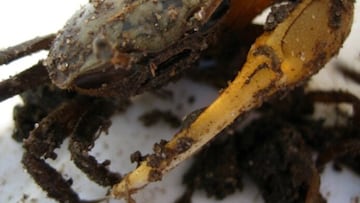
The Atlantic hairback fiddler crab, minuca vocator, is a semi-terrestrial crab that inhabits coastal areas of South America. As with other crabs of this type, the male has an oversized claw, which it uses during the breeding season to confront other individuals and to communicate.
In northern Colombia, this species was the subject of a recent study published on December 17, 2025, in the journal Global Change Biology. The research was conducted by scientists from the Institute of Marine Sciences at the University of Antioquia.
The work took place in urban mangroves, coastal ecosystems found in tropical and subtropical regions. This type of crab was chosen because they are thriving in these locations which are experiencing high levels of plastic pollution linked to urban and agricultural expansion.
In order to see how the fiddler crabs have evolved to deal with the substantial loads of plastic in their environments, the researchers marked small plots of land with polyethylene microbeads that were visible under ultraviolet light and repeated the experiment for more than two months.
Partial breakdown
The results showed that the crabs accumulated levels of microplastics far higher than those found in their surrounding environment, with most of the particles concentrated in their intestines. In addition, the particles appeared fragmented into even smaller sizes, suggesting that the animals’ digestive systems may be breaking plastic down into nanoplastics.
Beyond Abiotic Decay: Fiddler Crabs Accelerate Plastic Fragmentation in Pollution Hotspots
— Global Change Biology (@GlobalChangeBio) January 6, 2026
🔗 https://t.co/yBtVzXnZCL@Jose_M_Riascos @UdeA @CEMarin_org
The release of nanoplastics into the crabs’ tissues could spread through the food chain and affect their predators. The scientists stress the need for further research into the potential impacts on the health of these animals and on the ecosystem, especially in a world where microplastics are already present almost everywhere, including in humans.
Related stories
Get your game on! Whether you’re into NFL touchdowns, NBA buzzer-beaters, world-class soccer goals, or MLB home runs, our app has it all.
Dive into live coverage, expert insights, breaking news, exclusive videos, and more – plus, stay updated on the latest in current affairs and entertainment. Download now for all-access coverage, right at your fingertips – anytime, anywhere.
Complete your personal details to comment