


This is how typhoons form: what is the difference with hurricanes?
Typhoons and hurricanes are some of the most powerful and destructive weather systems in the world. What are the differences between the two?
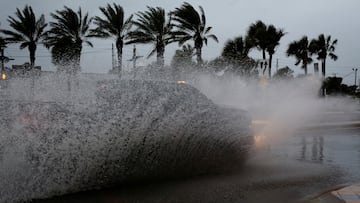

The US is currently in the midst of hurricane season, which typically spans from June to November, bringing powerful storms that can cause extensive damage along the coastlines. Meanwhile, countries across Asia are experiencing typhoon season, with peak activity usually occurring from July to October. These formidable storms share many similarities, such as their formation over warm ocean waters and their potential to bring heavy rain, strong winds, and flooding. However, they also differ in key ways, including their naming conventions, the areas they typically affect, and the specific atmospheric conditions that lead to their development.
What is the difference between a typhoon and a hurricane?
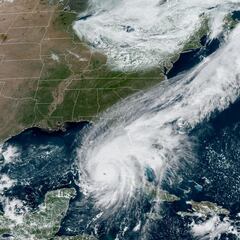
Typhoons and hurricanes are both large, powerful tropical cyclones that form over warm ocean waters. The main difference between them lies in their location and the terminology used to describe them.
Location
Typhoon: The term “typhoon” is used to describe tropical cyclones that form in the Northwestern Pacific Ocean. This region includes areas such as the western Pacific Ocean, the South China Sea, and the Philippine Sea.
Hurricane: The term “hurricane” is used to describe tropical cyclones that form in the North Atlantic Ocean, the central and eastern Pacific Ocean, and the South Pacific Ocean. In the North Atlantic and central/eastern Pacific, hurricanes are referred to as “hurricanes,” while in the South Pacific, they are known as “cyclones.”
Terminology
Typhoon: The term “typhoon” is derived from the Cantonese word “tai fung,” meaning “big wind.” It is used predominantly in the western Pacific region.
Hurricane: The term “hurricane” comes from the indigenous Taino people of the Caribbean, who referred to a storm god called “Huracan.” This term is used mainly in the Atlantic and eastern Pacific regions.
Despite these differences in terminology and location, typhoons, cyclones, and hurricanes are essentially the same meteorological phenomena, characterized by strong winds, heavy rainfall, and low pressure at the center, also known as the eye.
The naming conventions and scales used to measure their intensity might vary slightly among different regions, but the underlying processes and effects are quite similar.
What about tornadoes?
Tornadoes are also powerful weather phenomena, but they differ significantly from hurricanes and typhoons in terms of their size, characteristics, and impact.
Tornadoes are usually less than three miles wide, while hurricanes and typhoons can span hundreds of miles. Furthermore, these two systems tend to form over the sea, while tornadoes form over land.
Tornadoes are produced by strong vertical wind as well as high horizontal temperature changes, while the other two utilize weak vertical wind alongside low horizontal changes in atmospheric temperature.
The strongest tornadoes can have wind speeds over 300 mph, but hurricanes and typhoons rarely breach the 200 mph barrier.
Related stories
Get your game on! Whether you’re into NFL touchdowns, NBA buzzer-beaters, world-class soccer goals, or MLB home runs, our app has it all.
Dive into live coverage, expert insights, breaking news, exclusive videos, and more – plus, stay updated on the latest in current affairs and entertainment. Download now for all-access coverage, right at your fingertips – anytime, anywhere.
Complete your personal details to comment