


This is the Christmas decoration you probably have hanging in your house that is actually a parasitic plant
With its distinctive white berries, it is one of the symbols of the festive period in the United Kingdom and the United States.
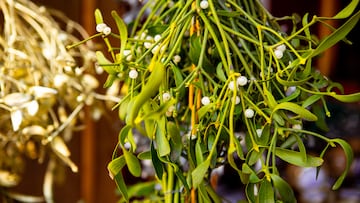
Nature is right at the heart of the Christmas period and while the king of festive foliage is the centerpiece - the tree itself (pine, spruce or fir), other evergreen plants have long been associated with the holiday season.
For decoration there’s holly, ivy, poinsettias and he most mysterious of all - mistletoe. Mistletoe (Viscum album) is native to Great Britain and can also be found all over Europe, although a related species with red fruit is found in southern parts of the continent and north Africa.
Why do we kiss under mistletoe? Of course it's origins are in norse mythology 😉 pic.twitter.com/0dhnOGNSs6
— Alvi Gunilla (@AlviGunilla) December 17, 2025
A Christmas kiss under the mistletoe
It is non-native to the United States but was introduced at the turn of the 20th Century. Today, it is one of the symbols of the festive period in the United Kingdom and US.
A symbol of fertility, life, and vitality, Mistletoe is all about romance and intimacy. It’s not certain where the tradition of hanging a sprig of mistletoe under a doorway and stealing a Christmas kiss underneath it began, but according to ancient English folklore, druids would embrace beneath mistletoe growing on trees.
The tradition of kissing beneath the mistletoe, the theme of this Christmas card, originates in an old Norse practice of warring enemies calling truce under mistletoe, sealing their pledge with a kiss.#SoundsLikeChristmas pic.twitter.com/ZOfP7TX9gE
— V&A (@V_and_A) December 9, 2017
Mistletoe lives off other plants
Considering its romantic connection, many people are surprised to find out that mistletoe is a parasitic plant. It feeds off trees and shrubs, extracting water and nutrients from its host.
Fortunately, decorative mistletoe is only partially parasitic, and does not totally drain and starve their host plants. The part of the branch where the mistletoe attaches may be infected and die - or the host can even outgrow the mistletoe.
Only after long-term infestation with large mistletoe loads can have an adverse effect on the host’s health.
Who knows, maybe that’s another reason why it’s collective to decorate our houses over Christmas.
Related stories
Get your game on! Whether you’re into NFL touchdowns, NBA buzzer-beaters, world-class soccer goals, or MLB home runs, our app has it all.
Dive into live coverage, expert insights, breaking news, exclusive videos, and more – plus, stay updated on the latest in current affairs and entertainment. Download now for all-access coverage, right at your fingertips – anytime, anywhere.
Complete your personal details to comment