


This is the reason why supersonic flights were banned and this is why they could make a comeback
Supersonic commercial travel became a reality after Concorde began flights with British Airways and Air France in January 1976.
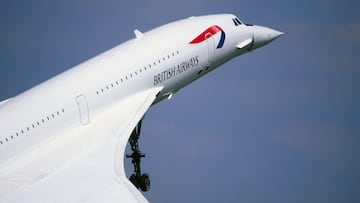

Flying to New York from London in 3 and a half hours for years was a reality with commercial flights between London-Paris and the Big Apple operating from the mid 70s until 2003.
Concorde cruised at Mach 2.04 (about 1,354 mph or 2,180 km/h), which is more than twice the speed of sound. The fastest recorded Concorde flight between New York and London was 2 hours, 52 minutes, and 59 seconds, achieved in February 1996.
However as the new century advanced, commercial supersonic flights became phased out due to a combination of significant environmental, economic, and safety concerns.
Sonic boom
The generation of a ‘sonic boom’ caused by then likes of Concorde was the primary reason for the ban on supersonic flight over land in many countries. When an aircraft breaks the sound barrier, it creates a “sonic boom” – a powerful shockwave that produces a loud, thunder-like noise that can be heard for many miles along the flight path.
Public outcry over these disruptive and startling noises, and concerns about potential property damage (e.g., rattling or breaking windows), led to widespread restrictions. Military supersonic jets had demonstrated these effects in tests over cities, leading to public disapproval.
Boom Supersonic’s XB-1 flight demonstrator has repeatedly broken the sound barrier without generating any audible sonic booms on the ground.
— Aviation International News (@AINonline) May 25, 2025
Now, more than 20 years since the retirement of the Concorde, is supersonic air travel on the verge of a resurgence? pic.twitter.com/YnKbVgkAlV
This ban severely limited the routes the Concorde could fly at supersonic speeds, restricting them almost exclusively to transoceanic flights (like over the Atlantic Ocean), where the sonic boom would not impact populated areas. This significantly reduced their operational flexibility and market.
The environmental impact was also a major consideration with supersonic aircraft being significantly less fuel-efficient per passenger than subsonic aircraft.
Economic viability was another pivotal factor in the demise with high operating costs, limited passenger capacity (the Concorde jet had a seating capacity for around 100 passengers) coupled with prohibitively high ticket prices all contributed to the retirement.
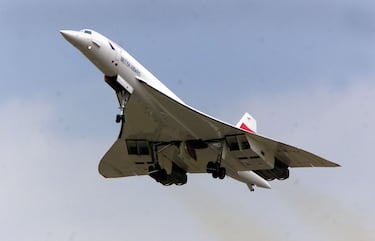
Supersonic flight return?
In the interim period of time since the ban on supersonic commercial travel, technology has advanced and things may be set to change after a recent executive order lifting a 52-year ban on overland commercial supersonic flights which lifts that ban and lays out a timeline for the introduction of noise-based certification rules for supersonic flights.
Recent technology has seen the introduction of a “boomless cruise” where an aircraft can fly above 30,000 feet, reach Mach 1 and produce no ground-level sounds — a phenomenon known as Mach cutoff.
Related stories
Should the situation continue to progress, the remainder of the current year will see test flights continue with 2029 cited by industry experts as a potential launch of supersonic commercial services.
The commercial supersonic landscape is evolving, and Boom is at the forefront.
— Boom Supersonic (@boomaero) July 7, 2025
The @WSJ explores the renewed interest in high-speed air travel, and how Boom is advancing a holistic solution. From aircraft design to propulsion and SAF compatibility. Read the full article:… pic.twitter.com/LUAzbtzj76
Get your game on! Whether you’re into NFL touchdowns, NBA buzzer-beaters, world-class soccer goals, or MLB home runs, our app has it all. Dive into live coverage, expert insights, breaking news, exclusive videos, and more – plus, stay updated on the latest in current affairs and entertainment. Download now for all-access coverage, right at your fingertips – anytime, anywhere.
Complete your personal details to comment