


This NASA probe is the closest to the Sun and records formations that humanity has never seen before
The Parker Solar Probe is revealing a side of the Sun humanity had never seen—offering new hope for protecting astronauts and tech from deadly solar storms.
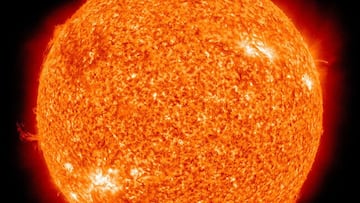
In a historic first, NASA’s Parker Solar Probe has ventured closer to the Sun than any spacecraft in history—and brought back images that could revolutionize our understanding of space weather.
Roughly the size of a compact car, the unmanned spacecraft flew within just 3.8 million miles of the Sun’s surface, plunging into the outer atmosphere—known as the corona—to capture never-before-seen views of solar phenomena.
This unprecedented journey could pave the way for major breakthroughs in predicting solar storms, which pose serious risks to satellites, astronauts, and even power grids on Earth.
Inside the mission: a five-year journey to the Sun
NASA launched the Parker Solar Probe in 2018, with a bold goal: to dive deep into the Sun’s atmosphere and gather critical data on solar activity. In 2021, the probe officially crossed into the Sun’s outer layer—a milestone in space exploration.
Now, for the first time, NASA has released detailed photographs of the solar atmosphere, revealing dramatic structures within the corona and capturing the flow of solar wind, a constant stream of charged particles emitted by the Sun.
What the probe saw: a twisting, violent solar landscape
The images, captured by a shoebox-sized instrument called the Wide-Field Imager for Parker Solar Probe (WISPR), expose stunning features of our nearest star, including:
- The solar corona, glowing with magnetic activity
- The solar wind, flowing in all directions
- The heliospheric current sheet, a spiraling structure that encircles the entire solar system
One of the most dramatic discoveries was the probe’s footage of coronal mass ejections (CMEs)—huge bursts of plasma and magnetic energy that erupt from the Sun. These powerful outbursts are a major cause of space weather disruptions and can knock out satellites and communication systems on Earth.
Stacked solar storms: What scientists are learning
Astrophysicist Angelos Vourlidas, one of the lead engineers behind the Parker Probe, explained that the spacecraft recorded CMEs stacking on top of one another—an extremely rare event.
“We’re using this [data] to figure out how the CMEs merge together, which can be important for space weather,” Vourlidas said.
Decoding these interactions could be a game-changer for scientists racing to forecast space weather more accurately—especially as deep space missions and commercial satellite deployments increase.
Related stories
Get your game on! Whether you’re into NFL touchdowns, NBA buzzer-beaters, world-class soccer goals, or MLB home runs, our app has it all.
Dive into live coverage, expert insights, breaking news, exclusive videos, and more – plus, stay updated on the latest in current affairs and entertainment. Download now for all-access coverage, right at your fingertips – anytime, anywhere.
Complete your personal details to comment