


Trump wants to oust Jerome Powell: What getting rid of the Federal Chair would do to the economy
Though the Federal Reserve is not controlled by the White House, Donald Trump has voiced his frustrations with the central bank throughout the election.
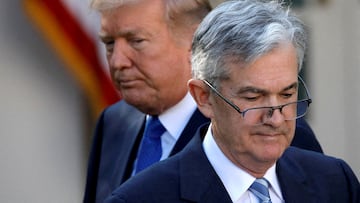

During his 2024 presidential campaign, Donald Trump criticized the Federal Reserve for intervening in the economy in ways he claimed benefited the Democratic Party. His attacks on Fed Chair Jerome Powell have only intensified since taking office, with Trump launching increasingly personal criticisms against the central bank’s leader.
On Wednesday, July 16, The New York Times reported that President Trump had drafted a letter to dismiss Federal Reserve Chair Jerome Powell and had consulted with Republican allies about whether to proceed with the unprecedented move. If the president follows through, it would mark a significant breach of the long-standing norm of keeping the Federal Reserve independent from political influence. Markets would likely react negatively. The S&P 500 dipped slightly after the Times report began circulating, as investors grew concerned that replacing Powell with a Trump loyalist could undermine confidence in the Fed’s policy decisions. The fear is that monetary policy might be shaped to serve political interests rather than economic fundamentals.
Trump’s record clashing with the Fed
In a November press conference, Chair Powell responded to a reporter’s question by stating he would not resign, even if urged to do so by President Trump or his administration. He has maintained this stance since Trump took office in January, emphasizing the Federal Reserve’s independence from political influence.
At a Bitcoin event in September, then-president-elect Trump interpreted a recent rate cut as a sign that “the economy is very bad,” though he added that such a cut only signals poor conditions if “assuming [the central bank] is not playing politics.” Fed officials have rejected this interpretation, asserting that their monetary policy decisions reflect confidence in the economy’s resilience and its ability to absorb lower rates without triggering a crisis.
In October 2024, Trump was asked whether he would retain Powell as Fed Chair. He avoided a direct answer but acknowledged that he had attempted to remove Powell during his first term, citing concerns that Powell was “keeping rates high.” This critique has remained central to Trump’s stance on the Fed since returning to office.
Former US President Donald Trump says he has the right to talk to the Federal Reserve Chair about interest rate decisions. Bloomberg News Editor-in-Chief John Micklethwait speaks to Trump at an event with the Economic Club of Chicago https://t.co/1ffpY7PBjG pic.twitter.com/2i2Dtrasc1
— Bloomberg TV (@BloombergTV) October 15, 2024
In August, responding to a question from the press, Trump admitted that he “had it out” with the Chair when he was in the White House. He also said that he believed the president should “at least have a say” in the Fed’s decisions and that he has a better economic instinct than many leaders at the US central bank.
June inflation report could delay rate cuts
The president has repeatedly claimed that the U.S. economy is not experiencing inflation—a statement that held up until this week’s Consumer Price Index (CPI) report. However, the latest data showed a 0.3 percent increase in average prices last month, suggesting that the White House’s sweeping tariffs are beginning to impact consumers and businesses across the economy.
With new data showing that inflation is not falling but instead rising across U.S. goods markets, the Federal Reserve’s Federal Open Market Committee (FOMC) is now far less likely to consider cutting interest rates. The FOMC is scheduled to meet at the end of the month, where members will decide whether to raise, lower, or maintain the federal funds rate at its current level.
Is the Fed a political organ on the US government?
The Fed is considered a non-political institution, but that erases the very real impact monetary policy has on the ability of workers to consume and save within the economy. Who gets bailed out, and who doesn’t? Who suffers the most when rates go up? Who loses their jobs when the economy tightens? While the Democrats tried to show voters that inflation was falling, gas prices were down, unemployment remained at a historic low, and the Federal Reserve was beginning to cut interest rates, the personal financial situation of many households pushed voters into the Trump camp or left them disheartened enough to stay home on election day. Exit polls conducted by NBC News found that many voters rated the current state of the economy as “poor” or “not so good.” The Democrats lost the public’s trust on the issue, and no data point would erase the financial stress many households faced. The Fed is not supposed to be a political institution, although the ways it works to favor financial stability at the expense of working conditions are inherently political. Who gets bailed out, and who doesn’t? Who suffers the most when rates go up? Who loses their jobs when the economy tightens?
Get your game on! Whether you’re into NFL touchdowns, NBA buzzer-beaters, world-class soccer goals, or MLB home runs, our app has it all. Dive into live coverage, expert insights, breaking news, exclusive videos, and more – plus, stay updated on the latest in current affairs and entertainment. Download now for all-access coverage, right at your fingertips – anytime, anywhere.
Complete your personal details to comment