


Two 19-year-olds build robot to replant forests: “The problem itself became our blueprint”
Marta Bernardino and Sebastião Mendonça are developing an automaton capable of reforesting areas ravaged by wildfires.
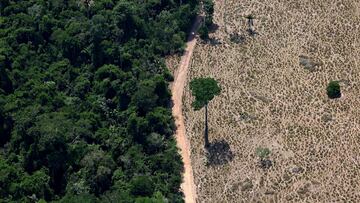

Portugal’s forested areas have been hit hard by an increase in wildfires in recent decades, sparking two young scientists to investigate novel new ways to help reforest the forgotten areas.
Marta Bernardino and Sebastião Mendonça grew up around the forested area near Lisbon and assumed that the natural beauty and biodiversity of the region was a fact of life. “It was a living playground where we built worlds, a sanctuary where the concepts of ‘importance’ were felt instinctively rather than taught,” Bernadino explained.
But as a series of fires have ravaged those mountain areas, the then-high school students set out to create a robot that could reforest the rocky, hilly parts that humans could not easily reach. Their creation - Trovador - was designed to help reforest the burnt areas more quickly than current methods would allow, helping to maintain the fragile environmental balance.
“The initial, passive hope that nature would heal itself was shattered when we learned the soil was too damaged and the fires too frequent for recovery,” Bernardino said.
“The defining moment came,” she continued, “when a project leader articulated the brutal truth: the terrain itself was the enemy, making manual replanting a dangerous and often impossible task.”
More than 60% of Portugal’s forests are characterized as steep, rugged terrain. Planting is unsafe and their is a real shortage of labor, slowing the speed of replanting efforts.
Bernardino and Mendonça began working on Trovador in 2023, spending just €15 ($17) on the first prototype, using entirely recycled parts. Early success helped the duo reach the final of National Geographic’s 2024 Slingshot Challenge, securing a grant of $10,000 to continue their vital work.
They have settled on a six-legged robot design to help it traverse the steep slopes and dense vegetation. Environmental activist Miguel Jerónimo of Renature explained the next steps for the project.
“Moving from an experimental prototype to a reliable field-ready tool will require robust testing to ensure it can handle the rough, humid and heavily vegetated conditions typical of Portuguese forests,” he said. “Operational endurance, mobility in dense vegetation and ease of maintenance are areas that need further exploration before the system can be considered ready for broad use.”
Related stories
Get your game on! Whether you’re into NFL touchdowns, NBA buzzer-beaters, world-class soccer goals, or MLB home runs, our app has it all.
Dive into live coverage, expert insights, breaking news, exclusive videos, and more – plus, stay updated on the latest in current affairs and entertainment. Download now for all-access coverage, right at your fingertips – anytime, anywhere.
Complete your personal details to comment