


Unique discovery in Italy: “It represents the lost Pompeii”
Technology and traditional archaeology are helping researchers uncover details that have been lost over time, such as towers, symbols of wealth and power.
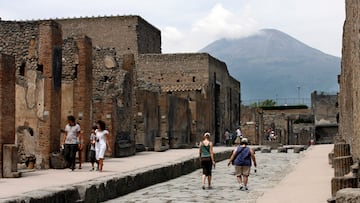
When Mount Vesuvius erupted in A.D. 79, it buried Pompeii under a crushing mix of molten rock, ash, and debris. Nearly two millennia later, the tragedy continues to fascinate explorers, historians, and anyone captivated by the secrets of lost civilizations.
Now, thanks to advanced imaging tools paired with traditional archaeological work, researchers are uncovering pieces of Pompeii that had vanished from history—details that once shaped the city’s skyline and reflected its wealth and power.
What the new technology is revealing
Recent projects have blended remote-sensing technology, close-range photography, and classic excavation techniques to reconstruct parts of Pompeii that no longer exist.
According to CNN, this approach is exposing long-lost structures—such as defensive towers and other architectural markers of status—that help redraw the map of ancient urban life. Even a staircase highlighted in the latest study has provided vital clues to Pompeii’s former layout.
Excavations continue to uncover vividly painted frescoes, everyday household objects, and even the remains of residents caught in the disaster.
“By reconstructing the lost architecture, we gain a more nuanced and historically accurate understanding of the ancient city and life within it,” said Dr. Susanne Muth, co-author of the study and professor at the Humboldt University of Berlin’s Institute of Archaeology.
📰 Digital reconstruction of a tower at #Pompeii sheds light on the top floors of buildings, revealing the 'lost' skyline of the ancient city#ArchaeologyNews via @CNNhttps://t.co/88GOUFYkkO
— 🅰ntiquity Journal (@AntiquityJ) December 8, 2025
How researchers are rebuilding Pompeii in 3D
The findings are being shared through the Pompeii Reset Project and published in the E-Journal of the Excavations of Pompeii. These digital reconstructions allow viewers to see the city from angles that would have been unimaginable just a few years ago.
Researchers are using LiDAR scans—light-detection and ranging technology—alongside high-resolution photography to map surviving structures and generate 3D models. Clues like small holes or indents in collapsed walls help identify missing elements, allowing experts to digitally reconstruct what buildings likely looked like before the eruption.
The method mirrors techniques used in video-game design, offering an accessible way for the public to explore a long-lost world. It’s a modern lens on a place that continues to enchant—and a technological leap toward understanding the Pompeii that once thrived.
Related stories
Get your game on! Whether you’re into NFL touchdowns, NBA buzzer-beaters, world-class soccer goals, or MLB home runs, our app has it all.
Dive into live coverage, expert insights, breaking news, exclusive videos, and more – plus, stay updated on the latest in current affairs and entertainment. Download now for all-access coverage, right at your fingertips – anytime, anywhere.
Complete your personal details to comment