


Valerie Reyna, psychologist, on why flu shot numbers are down: “People form a global impression of what they are told and experience”
Data from the U.S. Centers for Disease Control and Prevention suggests that Americans are experiencing the worst flu season in decades.
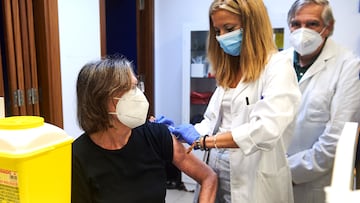

This winter has been a historically bad flu season, one of the worst in decades according to data from the U.S. Centers for Disease Control and Prevention. More than 7,400 people have died because of the flu this winter, a staggeringly high number at a time when Americans are increasingly unwilling to get the influenza vaccine.
As of January 2026, just 45% of children and 46% of adults had received the vaccine. It’s part of a broader trend of vaccine skepticism in the United States that is putting vulnerable people at greater risk.
It’s flu season! Flu can be serious for children, but flu vaccination is the best way to protect your kids from flu and serious flu complications and #FightFlu. If your family hasn't gotten vaccinated against flu, talk to your doctor: https://t.co/RSTCnizBnl pic.twitter.com/cvompvzB46
— CDC Flu (@CDCFlu) January 27, 2026
There have been countless public health initiatives regarding vaccine awareness but there also an acknowledgement that individuals’ decision-making processes are not entirely logical. Researchers refer to the ‘gist’ as the centerpiece of decision-making; an idea that is difficult to supplant once it is firmly held.
“We make decisions based on the bottom-line gist of information: What does all this information boil down to? What’s the decision really about?” said Valerie Reyna, Professor of Human Development in the Department of Psychology at Cornell Human Ecology. “If we know the essence of how someone feels about these ideas, we can explain and predict their intentions with respect to vaccination.”
Essentially, Reyna describes how vaccination decisions are not solely influenced by empirical facts and figures. More typically, individuals have broad beliefs about the benefits vs risks of vaccines. These intrinsic beliefs are the ‘gists’ that Reyna identified.
“Part of our mind looks at details and precise facts, but the other part of our mind looks at the bottom-line, qualitative gist—and that’s the more determinative part,” Reyna continued. “People form a global impression of what they are told and experience, for example, ‘Overall, I think the benefits from vaccination are high, and the risks are nil.’ That would be a gist for people who get vaccinated, and that’s what we showed.”
Reyna’s message to public health bodies is to ensure that people form a positive impression of vaccinations. While it can be tempting to bombard vaccine-skeptics with facts, that will do little to change their base understanding of vaccines. A more emotional, gist-focused approach might help to turn some skeptics into believers.
Related stories
Get your game on! Whether you’re into NFL touchdowns, NBA buzzer-beaters, world-class soccer goals, or MLB home runs, our app has it all.
Dive into live coverage, expert insights, breaking news, exclusive videos, and more – plus, stay updated on the latest in current affairs and entertainment. Download now for all-access coverage, right at your fingertips – anytime, anywhere.
Complete your personal details to comment