


What do the Hurricane Hunters really do? The 53rd Weather Reconnaissance Squadron is on its way to the Northeast storm
As New York and New Jersey face historic snowfall, specialized crews brave the storm’s eye to gather critical weather data.
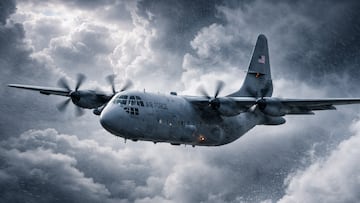

Hurricane Hunters are flying into the eye of the storm, quite literally, as the northeast coast of the United States, including New York City, continues to be blasted by a record-breaking blizzard.
On Sunday, February 22, numerous northeastern areas recorded historic snowfall totals. In NYC’s Central Park, 8.8 inches fell, shattering the previous daily record of 6 inches set in 2008.
Overnight, snowfall in New Jersey surpassed 10 inches. Early Monday morning, more than 250,000 customers were without electricity, over 100,000 of them in the Garden State.
Bomb cyclone meets Hurricane Hunters
The latest nor’easter to batter the coast reached sufficient strength to be reclassified as a bomb cyclone. But that hasn’t stopped the Hurricane Hunters, also known as the 53rd Weather Reconnaissance Squadron, from doing their thing.
For most of us who travel on commercial airplanes, the thought of deliberately flying into a bomb cyclone does not sound appealing, even if we aren’t entirely sure what a bomb cyclone actually is. For the Hurricane Hunters, it’s just part of the job.
According to the National Weather Service, the 53rd WRS’s objective is to “fly specially equipped aircraft directly into the eye of the storm to collect crucial data that helps protect lives and property.”
Beyond winter storms
In addition to winter storm missions, the squadron also “provides surveillance of tropical storms and hurricanes in the Atlantic Ocean, the Caribbean Sea, the Gulf of Mexico and the central Pacific Ocean for the National Hurricane Center in Miami,” per the 403rd Wing.
The Hurricane Hunters use WC-130J aircraft, specialized weather reconnaissance planes designed to withstand the most severe conditions imaginable.
The organization has 20 authorized aircrews and 10 WC-130Js. On any aircraft at a given time, there are five crew members: pilot, co-pilot, navigator, flight meteorologist and weather reconnaissance loadmaster.
The pilot, co-pilot and navigator handle the plane’s route and positioning, while the flight meteorologist and weather reconnaissance loadmaster focus on the data.
Collecting life-saving data
As the 403rd Wing explains, the flight meteorologist “observes and records meteorological data at flight level using a computer that encodes weather data every 30 seconds.”
The weather reconnaissance loadmaster, meanwhile, “collects and records vertical meteorological data using a parachute-borne sensor known as a dropsonde,” which “measures and encodes weather data down to the ocean surface.”
“The best information about a storm is still found within the storm itself,” says the National Weather Service. Data collected by the Hurricane Hunters can ultimately influence whether people evacuate homes or businesses close, potentially saving lives and millions of dollars.
Related stories
Get your game on! Whether you’re into NFL touchdowns, NBA buzzer-beaters, world-class soccer goals, or MLB home runs, our app has it all.
Dive into live coverage, expert insights, breaking news, exclusive videos, and more – plus, stay updated on the latest in current affairs and entertainment. Download now for all-access coverage, right at your fingertips – anytime, anywhere.
Complete your personal details to comment