


What time is the total lunar eclipse in the United States on Tuesday, March 3, 2026? When and where to see the “blood moon”
A total lunar eclipse will be visible from various parts of the world, including the United States on March 3. Here’s what you need to know.
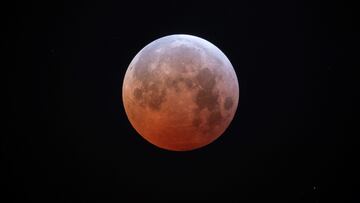
A total lunar eclipse, which will tint the Moon red, will be visible this Tuesday, March 3, across multiple regions worldwide, including the United States. Observers there will need to wake up early, as totality will begin shortly after 6:00 a.m. Eastern Time.
During a lunar eclipse, which occurs during the full moon phase, Earth’s shadow darkens the Moon. “When Earth is positioned precisely between the Moon and Sun, Earth’s shadow falls upon the surface of the Moon, dimming it and sometimes turning the lunar surface a striking red over the course of a few hours,” explains the NASA.
The agency notes that the reddish color seen during a lunar eclipse is caused by the same phenomenon that makes the sky appear blue and sunsets appear orange: “During a lunar eclipse, the Moon appears red or orange because any sunlight that’s not blocked by our planet is filtered through a thick slice of Earth’s atmosphere on its way to the lunar surface. It’s as if all the world’s sunrises and sunsets are projected onto the Moon.”
Where and when to watch the total lunar eclipse
Totality will be visible at dusk across eastern Asia and Australia, throughout the night across the Pacific, and during the early morning in North and Central America, as well as in the far western regions of South America. The eclipse will appear partial in Central Asia and much of South America. It will not be visible in Africa or Europe.
According to NASA, these are the approximate times for viewing the March 3 total lunar eclipse in the United States:
- Penumbral eclipse begins: 2:44 a.m. PT / 4:44 a.m. CT / 5:44 a.m. ET
- Partial eclipse begins: 3:50 a.m. PT / 4:50 a.m. CT / 5:50 a.m. ET
- Totality begins: 3:04 a.m. PT / 5:04 a.m. CT / 6:04 a.m. ET
- Totality ends: 4:03 a.m. PT / 6:03 a.m. CT / 7:03 a.m. ET
- Partial eclipse ends: 5:17 a.m. PT / 7:17 a.m. CT / 8:17 a.m. ET
- Penumbral eclipse ends: 6:23 a.m. PT / 8:23 a.m. CT / 9:23 a.m. ET
No special equipment is required to observe a total lunar eclipse. You only need a clear line of sight to the Moon, so it is best to choose a dark location away from bright lights. For a better view, binoculars or a telescope can be helpful.
Time and Date will livestream the March 3 total lunar eclipse on its YouTube channel. The broadcast, scheduled to begin at 4:30 a.m. ET, will include live images from Los Angeles, Western Australia, and other locations, with commentary from journalist Anne Buckle and astrophysicist Graham Jones.
Related stories
Get closer to the game! Whether you like your soccer of the European variety or that on this side of the pond, our AS USA app has it all. Dive into live coverage, expert insights, breaking news, exclusive videos, and more. Plus, stay updated on NFL, NBA and all other big sports stories as well as the latest in current affairs and entertainment. Download now for all-access coverage, right at your fingertips – anytime, anywhere.
And there’s more: check out our TikTok and Instagram reels for bite-sized visual takes on all the biggest soccer news and insights.
Complete your personal details to comment