


When, how, and where to see the spectacular meteor shower from Halley’s comet in the skies over the United States.
All the details you need to catch this year’s Eta Aquarids meteor shower, which will take place on May 5-6, 2025.
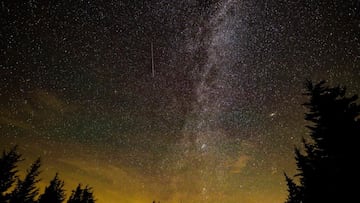

The night of May 5 will count among the great celestial phenomena in 2025, for those in the United States.
The Eta Aquarids is an annual meteor shower that occurs from late April to mid-May, with the peak occurring on 6 May in 2023. The meteor shower is caused by the Earth passing through the debris left behind by Halley’s Comet, which last passed through the solar system in 1986.
This debris will enter the atmosphere in the early morning hours at a speed 100 times faster than that of a jet fighter. They begin burning up 62 miles above the surface of the planet.
"The meteor shower will peak the night of May 5 into the morning hours of May 6," reports NASA.
Ready, set, sky watch!
— NASA Goddard (@NASAGoddard) May 3, 2025
The first week of May brings the annual Eta Aquarids meteors, peaking on May 6. These meteors are known for their speed, leaving glowing “trains” behind.
For more May skywatching 👇 https://t.co/FeMqghJH5l pic.twitter.com/F9YVPHgaaI
Where does the name of the event come from?
They are named after the star Eta Aquarii, which is located in the constellation Aquarius and is the radiant point of the meteor shower. The Eta Aquarids are known for producing bright, fast-moving meteors that can leave persistent trails, and under good viewing conditions, up to 55 meteors per hour can be seen.
Are special equipment or telescopes needed to view the meteor shower?
The meteor shower becomes visible each morning at around 2:30 a.m. EDT, remaining active until around the break of dawn at 5:15 a.m. EDT.
To observe the Eta Aquarids, it is best to find a dark location away from city lights, lie down, and look up at the sky. Make sure to allow your eyes to adjust to the darkness for at least 20 minutes.
Viewing tip: During the pre-dawn hours, find a safe space away from city or streetlights, lie flat with your feet facing east and look up. After about 30 minutes in the dark, your eyes will adapt, and you will begin to see meteors!
— NASA Goddard (@NASAGoddard) May 3, 2025
The meteor shower can be seen with the naked eye, and no special equipment or telescopes are needed.
Related stories
Get your game on! Whether you’re into NFL touchdowns, NBA buzzer-beaters, world-class soccer goals, or MLB home runs, our app has it all.
Dive into live coverage, expert insights, breaking news, exclusive videos, and more – plus, stay updated on the latest in current affairs and entertainment. Download now for all-access coverage, right at your fingertips – anytime, anywhere.
Complete your personal details to comment