


When will the Supreme Court decide whether Trump can end birthright citizenship?
Justices will review whether an executive order can restrict birthright citizenship, a ruling that could reshape long-standing constitutional doctrine.
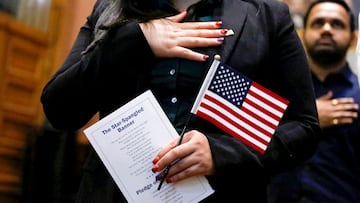

The Supreme Court will decide whether the Trump administration’s plan to end birthright citizenship for certain people is constitutional. In September, Donald Trump asked the Court to support his effort to eliminate birthright citizenship for the children of undocumented immigrants and foreigners on short-term visas, a move many consider unconstitutional.
The US government has asked the justices to rule definitively on whether the executive order – signed by the Republican president at the start of his second term – can legally end this right. The Court announced on Friday that it will take up the issue, with arguments likely in April and a decision expected by late June.
BREAKING: The Supreme Court said Friday that it would hear an expedited appeal of President Trump's case seeking to end birthright citizenship by executive order.
— ABC News (@ABC) December 5, 2025
ABC News’ Devin Dwyer reports. pic.twitter.com/MNlbeLlSCs
This is what the Constitution says about the right to citizenship by birth
Under the constitutional interpretation applied for decades, children born in the United States automatically receive American citizenship, even if their parents are undocumented immigrants or temporary visitors.
Section 1 of the 14th Amendment states: “All persons born or naturalized in the United States and subject to the jurisdiction thereof are citizens of the United States and of the State wherein they reside.” The phrase “subject to the jurisdiction thereof” was originally intended to exclude only the children of foreign diplomats, not the children of undocumented immigrants or visa holders.
Trump and several Republican allies argue that birthright citizenship has been extended to the children of undocumented immigrants because of what they call a misreading of the 14th Amendment, and that the provision should not apply to children born on US soil to parents who are in the country unlawfully.
According to the administration, if the measure is upheld, birthright citizenship would be limited to those with at least one parent who is either a US citizen or a lawful permanent resident. The proposal states that the right would not apply to babies born to temporary legal visitors or to those who entered the country illegally.
Related stories
Get your game on! Whether you’re into NFL touchdowns, NBA buzzer-beaters, world-class soccer goals, or MLB home runs, our app has it all.
Dive into live coverage, expert insights, breaking news, exclusive videos, and more – plus, stay updated on the latest in current affairs and entertainment. Download now for all-access coverage, right at your fingertips – anytime, anywhere.
Complete your personal details to comment