


Where is Kamchatka, the Russian region that was the epicenter of the earthquake that has put the Pacific on alert?
The peninsula is located in eastern Russia, very close to Alaska. It lies within the so-called Pacific Ring of Fire, a common site of earthquakes.
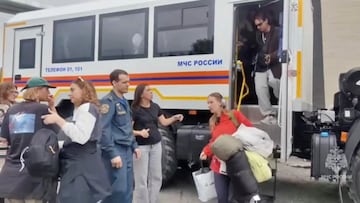
A powerful earthquake off Russia’s Kamchatka Peninsula has put several countries on high alert for potential tsunamis. The United States - particularly Hawaii and Alaska - along with Japan, Mexico, Chile and Ecuador, have issued warnings urging coastal residents to stay vigilant throughout the day.
Where is Kamchatka - and why does it matter?
Tucked between the Bering Sea and the Pacific Ocean, Kamchatka is one of the easternmost regions of Russia, lying just across the water from Alaska. The peninsula stretches roughly 775 miles long and 275 miles wide, covering an area nearly twice the size of California. Despite its vastness, it’s home to just over 400,000 people.
Kamchatka is a volcanic hotspot, boasting 160 volcanoes, 29 of which are still active. The most prominent is Klyuchevskoy, a towering stratovolcano that rises over 15,800 feet and has erupted more than 100 times in the past 3,000 years. For some Indigenous communities, it’s considered sacred - a mythical birthplace of the world.
A hotspot in the Pacific Ring of Fire
Kamchatka sits squarely on the Pacific Ring of Fire, a seismically active zone that encircles the Pacific Ocean and is responsible for the majority of the world’s earthquakes and volcanic eruptions. The region’s most powerful quake on record struck in 1952, registering a magnitude 9.0 and generating a massive tsunami.
A land once off-limits
During the Soviet era, Kamchatka was closed to foreigners due to its strategic military importance. Even today, it remains remote - about an eight-hour flight from Moscow and separated by nine time zones. But in recent years, it’s gained attention for its natural wonders and scientific discoveries.
In 1997, UNESCO designated Kamchatka’s volcanic landscape a World Heritage Site. Geologists have since uncovered rare minerals in the region, including petrovite, a bright blue compound found near active volcanic vents. “It’s the kind of place where you might discover one or two new minerals every month,” said Joël Brugger, a geoscience professor at Monash University, in an interview with the BBC.
Kamchatka is also rich in gold, tungsten, platinum, and pyrite. And in a lesser-known chapter of Cold War history, the Soviet Union even used the peninsula to test lunar rovers.
Related stories

What was the most powerful tsunami ever recorded?

How strong was the 2011 earthquake in Japan?
Get your game on! Whether you’re into NFL touchdowns, NBA buzzer-beaters, world-class soccer goals, or MLB home runs, our app has it all.
Dive into live coverage, expert insights, breaking news, exclusive videos, and more – plus, stay updated on the latest in current affairs and entertainment. Download now for all-access coverage, right at your fingertips – anytime, anywhere.
Complete your personal details to comment