


Will Trump’s Venezuela strike bring down oil prices? What we know about the U.S. takeover of the largest reserve in the world
Speaking after a U.S. strike that led to the capture of Venezuelan leader Nicolás Maduro, Donald Trump said American firms would “fix” the country’s oil industry.
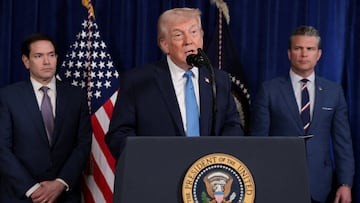

Industry experts say they expect little immediate change in oil prices in the wake of the U.S.’s strike on Venezuela, which saw American forces capture the country’s leader, Nicolás Maduro.
Trump promises fix to Venezuela’s “badly broken” oil industry
Speaking this weekend, American president Donald Trump said the U.S. is “going to run” Venezuela until a “safe, proper and judicious transition” can be guaranteed in the South American nation.
Maduro was taken to New York after the U.S. intervention in the Venezuelan capital, Caracas, early on Saturday. The 63-year-old, who had come to power in Venezuela in 2013, is now being held at a jail in Brooklyn, having been indicted by the U.S. on drugs and weapons charges.
Venezuela “pumping almost nothing”
In a news conference announcing the U.S.’s Venezuela raid later on Saturday, Trump said America will play a leading role in overhauling Venezuela’s oil industry.
“We’re going to have our very large United States oil companies - the biggest anywhere in the world - go in, spend billions of dollars, fix the badly broken infrastructure, the oil infrastructure,” Trump told reporters. He added that the oil business in Venezuela has been “a total bust for a long period of time”.
“They were pumping almost nothing by comparison to what they could have been pumping,” the U.S. president said.
How much oil does Venezuela have?
Venezuela has the world’s largest proven oil reserves, notes the U.S. Energy Information Administration (EIA). As of 2023, the agency says, the country’s reserves amounted to just over 300 billion barrels - a total that accounts for “approximately 17% of global reserves”.
However, Venezuela’s current oil production represents less than 1% of the global market, the EIA says.
This is due to a combination of factors, such as the effects of international sanctions on Venezuela’s state oil company, Petróleos de Venezuela (PDVSA), and the country’s badly aging oil-industry infrastructure.
Many Venezuelan pipelines are estimated to be over half a century old, says the EIA, adding: “PDVSA estimates that updating pipeline infrastructure alone would require around $8 billion in investment”.
Amid U.S. embargoes on imports from the country, the arrival of Venezuelan oil in America had dropped to around 100,000 barrels per day in recent months, according to the Atlantic Council. However, that remains a sizeable chunk of the mere 920,000 daily barrels that Venezuela produces, per data compiled by the Organization of the Petroleum Exporting Countries (OPEC).
By comparison, the U.S. itself produces around 13 million barrels per day, says the OPEC.
“Too much oil in the market”
Around the globe, what’s more, oil supply is currently well ahead of demand, leading prices to slide throughout 2025. Indeed, the Australian investment bank Macquarie has reportedly described the market as “cartoonishly oversupplied”.
It’s a state of affairs which, allied with Venezuela’s insignificant current impact on the oil industry, means that experts anticipate the U.S.’s intervention will have a minimal short-term effect on prices.
“The bottom line is there’s still too much oil in the market, and that’s why oil prices will not go ballistic,” Arne Lohmann Rasmussen, chief analyst at A/S Global Risk Management, told CNBC.
That said, any immediate-term disruption to Venezuela’s oil production could have a more notable, specific effect on diesel prices.
The extra-heavy type of crude oil produced in Venezuela is “highly suitable for producing diesel”, explains the Atlantic Council, which cautions: “Recently, the International Energy Agency has warned that middle distillate markets - including diesel - are already tight.
“Accordingly, if Venezuela production is removed from the market, then diesel prices could shift higher, which is likely to increase global inflation.”
Per the EIA, diesel fuel powers most agricultural and construction equipment used in the U.S.
“It could be a game-changer”
But while the short-term influence of the U.S.’s Venezuela intervention is expected to be limited, an overhaul of the country’s oil industry has the potential to be far more significant in the longer term. “Venezuela can be a huge deal but not for 5 to 10 years,” Phil Flynn, a senior market analyst at Price Futures Group, told CNN.
In the U.S., Flynn explained to the media outlet, many oil refineries are better suited to processing Venezuela’s extra-heavy crude oil, rather than the lighter variant found in America.
“If indeed this continues to go smoothly […] and U.S. companies are allowed to go back and rebuild the Venezuelan oil industry, it could be a game-changer for the global oil market,” he said.
For now, though, American oil firms are likely to be hesitant about investing heavily in Venezuela, says David Goldwyn, who served as an energy official in Barack Obama’s White House.
“Everything we have learned about government transitions from Iraq, from Afghanistan, from other countries, is that transitions are hard,” Goldwyn told an interview with CNBC.
“No company is going to want to commit to invest billions of dollars for a long-term operation until they know what the terms are. And they can’t know what the terms are until you know what the government is going to be.”
Related stories


Get your game on! Whether you’re into NFL touchdowns, NBA buzzer-beaters, world-class soccer goals, or MLB home runs, our app has it all.
Dive into live coverage, expert insights, breaking news, exclusive videos, and more – plus, stay updated on the latest in current affairs and entertainment. Download now for all-access coverage, right at your fingertips – anytime, anywhere.
Complete your personal details to comment