

Limited Run Games
MARVEL MaXimum Collection: When preservation matters more than playability
Six classic Marvel games return—but not all of them survive the test of time.
Year after year, new collections arrive designed to satisfy a very specific need: nostalgia and preservation. Games so distant in time that, for many, they became memories of afternoons spent at the arcade—or, for others, myself included, the first video games we ever had at home. In the early 1990s, before Marvel became the dominant brand it is today, several titles based on its characters were released on both consoles and arcade machines, featuring not only its most recognizable heroes at the time, but also more obscure ones. Many of these games were lost over time, whether due to expired licenses, studios shutting down, or simple preservation limitations. Today, MARVEL MaXimum Collection aims to bring that era back while also putting nostalgia to the test and asking how well it has truly aged.
To me, my X-Men!
MARVEL MaXimum Collection brings together six titles inspired by characters from the House of Ideas, all originally released in the early 1990s across different platforms. The lineup includes Silver Surfer, Captain America and the Avengers, Spider-Man/X-Men: Arcade’s Revenge, Spider-Man/Venom: Maximum Carnage, Venom/Spider-Man: Separation Anxiety, and the undeniable crown jewel of the collection, X-Men: The Arcade Game.
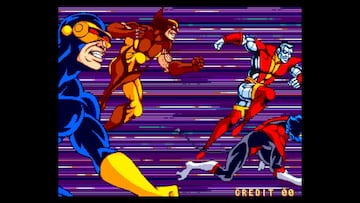
Whenever possible, each title includes multiple versions, allowing players to experience SNES, Mega Drive, Game Boy, Game Gear, NES, or Arcade editions. This not only expands the amount of content available, but also allows for direct comparisons of how the same game was reinterpreted depending on each platform’s technical capabilities. It becomes an interesting exercise in historical preservation, one that also highlights both the limitations and strengths of game development at the time. It is no surprise that the dominant genre is the beat ’em up, a clear reflection of the trends of that era.
As is common with this type of collection, several modern accessibility features are included: quick save states per game, a rewind function, visual filters to simulate CRT displays—particularly relevant for this package—and customizable borders. There is also a section dedicated to archival material, including original box art, illustrations, and manuals. This is where one of the main criticisms emerges: the manuals are in constant motion, a stylistic choice that negatively affects readability and makes them difficult to consult. Added to this is a music player that allows listeners to enjoy the soundtracks from each game across all available versions.
Still, the core of the package remains the gameplay experience. X-Men: The Arcade Game continues to be the main draw. The ability to play with up to six players, both online and locally, remains impressive even today. Its design, pacing, and technical presentation—on-screen action, sound, and sheer number of characters—make it clear why it was such a landmark in its time and why it remains enjoyable decades later.
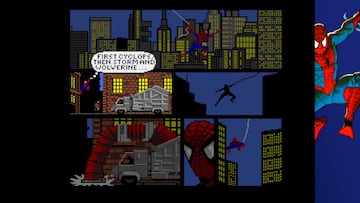
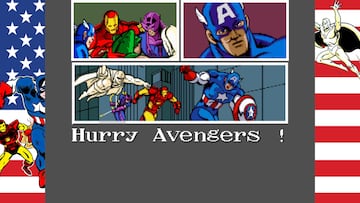
However, the rest of the games do not fare quite as well. And notably, this is not due to poor ports or subpar versions being selected. On the contrary, players have plenty of options to choose from. The issue is that many of these games clearly show the limitations of their era. Spider-Man and X-Men features very restricted mechanics for its characters, though the effort made to adapt it across multiple platforms is still impressive. Meanwhile, the Spider-Man and Venom titles—despite being standouts in their day that successfully brought 1990s comics to consoles—feel mechanically limited by modern standards, even if they remain enjoyable and offer an interesting comparison between their SNES and Mega Drive versions. Silver Surfer, for its part, is a brutally punishing game, a textbook example of the “Nintendo Hard” philosophy of the NES era. Captain America and the Avengers holds up more as a nostalgic curiosity than a truly strong game in its arcade version, while its other iterations leave much to be desired.
As a collection, MARVEL MaXimum Collection fulfills its core purpose: preserving and presenting a specific chapter of Marvel’s history in video games. The archival work is solid, ambitious, and respectful of the original material. At the same time, it serves as a clear reminder that nostalgia does not always go hand in hand with good gameplay. Some titles have aged with surprising grace; others expose design decisions that are difficult to justify today. It is precisely within that contrast that the collection finds its greatest value—not only as a revival of memories, but as a document of an entire era, with all its strengths and shortcomings intact.
Follow MeriStation USA on X (formerly known as Twitter). Your video game and entertainment website for all the news, updates, and breaking news from the world of video games, movies, series, manga, and anime. Previews, reviews, interviews, trailers, gameplay, podcasts and more! Follow us now!