


Pokémon
Pokémon Pokopia: A commitment to peace and creativity
The new spin-off of the franchise leaves battles behind to focus on building communities and coexisting with our favorite creatures.
For years, the Pokémon formula has been based on capturing, training, and battling. However, after playing the final version of Pokémon Pokopia, it’s clear that The Pokémon Company and Koei Tecmo have decided to explore a much more contemplative path. In this title, which will be released on March 5, 2026, we don’t play as a trainer, but as a human-looking Ditto whose mission is to bring life back to a desolate world. The proposal combines construction, simulation, and community management, evoking references such as Animal Crossing, Minecraft, and Dragon Quest Builders, but with the inherent charm of pocket creatures.
How does the Pokémon experience change without combat?
The first structural difference is the disappearance of competitive pressure. There are no gyms or turn-based battles here: the core gameplay revolves around creating habitats. Pokémon aren’t captured; they’re attracted to suitable environments. Build a pond, add a fishing chair, and soon a Magikarp may appear, ready to stay.
The experience has an almost therapeutic component. Instead of memorizing tables of types, you learn to use movements for practical purposes: Water Gun to water crops, Cut to clear paths, or brute force to break rocks. Creatures are integrated as a collaborative workforce: a Charmander lights fires; a Bulbasaur helps lift structures with its vines. The game cycle is based on a progressive transformation of the environment: from a gray wasteland to a vibrant town.
What new features does Ditto bring as the protagonist?
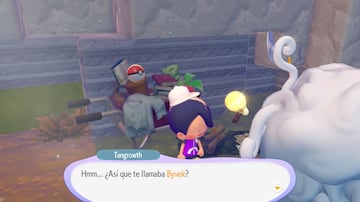
Making Ditto a playable avatar is a particularly wise design decision. Its ability to transform enables dynamic exploration mechanics: we can take the form of Lapras to cross seas or Dragonite to reach elevated areas.
The customization and manufacturing system is also extensive. From basic furniture to complex structures, everything is built on the workbench, progressively expanding the island’s possibilities.
Key features include:
- Multiplayer mode: Up to four players can cooperate on the same island.
- Game Share feature: Allows you to invite a user who does not own the game (compatible even with the first Nintendo Switch).
- New variants and characters: New characters such as Professor Tangrowth and the mysterious Musgorlax expand the world’s background.

Is it worth making the leap to Pokémon Pokopia?
If you enjoy management games and want a break from the typical Pokémon competition, the answer is a resounding yes. The technical fluidity of Nintendo’s new console is remarkable, maintaining a good frame rate that makes every Pokémon animation feel alive.
Beyond becoming just another spin-off, Pokémon Pokopia attempts to expand what it means to live in that world. It’s a title that prioritizes collaboration over conquest, ideal for enjoying in short sessions before bed or for sharing an afternoon of building with friends.
Follow MeriStation USA on X (formerly known as Twitter). Your video game and entertainment website for all the news, updates, and breaking news from the world of video games, movies, series, manga, and anime. Previews, reviews, interviews, trailers, gameplay, podcasts and more! Follow us now!