


2Wai, the app that wants to turn your deceased relatives into mobile avatars, sets social media ablaze
2Wai boasts avatars that talk like your loved ones and promises that “three minutes can last forever.”


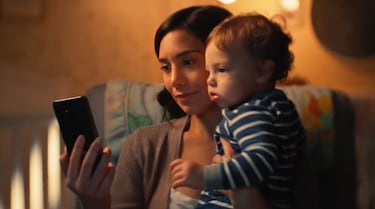
The scene could open an episode of Black Mirror: a pregnant woman talks to her mother, who has already died, through her smartphone screen; months later, the same digital grandmother reads stories to her granddaughter before bedtime; years later, the grandson walks home while chatting with that hologram he has never met in person. This is not fiction, but rather the promotional video used by Los Angeles startup 2Wai to present its app for creating interactive avatars of deceased family members.
What if the loved ones we've lost could be part of our future? pic.twitter.com/oFBGekVo1R
— Calum Worthy (@CalumWorthy) November 11, 2025
The commercial promise is formulated with surgical precision: “with 2Wai, three minutes can last forever,” reads the clip released on X by actor and co-founder Calum Worthy, who overnight became the face of a product that claims to be able to recreate a person’s appearance, voice, and even memories from just a few minutes of video recorded on a smartphone.
A digital grandmother on your smartphone
On its website, 2Wai defines itself as “the first social network for human avatars” and markets HoloAvatar as a digital twin that “looks and talks like you, and even shares the same memories,” created with your phone’s camera and a few guided steps from the app itself. The company also emphasizes the commercial potential of the technology: brands, creators, and “icons” will be able to multiply themselves into virtual clones to serve fans or customers at any time and in any language.
The most controversial part, however, is not the replicated influencers or historical figures turned into visual chatbots, but rather the funeral aspect. The campaign itself revolves around the idea of recording your parents or grandparents “while they are still alive” so that, when they are gone, they can continue to be present in the daily lives of their children and grandchildren through notifications. What a few years ago sounded like academic speculation about the technology business surrounding grief is now entering the Apple App Store with a download button and a subscription plan on the horizon.
Social media up in arms: from shock to anger
If the aim of the campaign was to excite, the effect has been quite the opposite. Worthy’s video on X has garnered hundreds of responses full of rejection, many of them describing the app as “disgusting,” “perverse,” or simply “more disturbing than an episode of Black Mirror,” with users calling for the technology to be “destroyed” before it becomes normalized.
The press and social media are repeating the same idea: turning grief into a premium subscription risks emotionally exploiting vulnerable people and delaying a process that, however painful, is part of life. Technology and generalist websites are already talking about a textbook example of how the AI industry is willing to turn any intimate boundary into a recurring “service” as long as there is enough data and credit cards on the other side.
Privacy, consent, and the inheritance of our data
There is also the whole legal and ethical aspect that the promotional video carefully avoids. Who controls the avatar when the person dies: the family, the company, both? How long are the original recordings and derivative models stored? What happens if a company goes bankrupt, is sold, or changes its strategy and decides to reuse that data for other products? Will we see our deceased mother selling us ready-made soup?

Data protection regulations still lag far behind these practices, and the simple fact that the subject being recorded gives their consent today does not guarantee that they can imagine tomorrow’s scenarios of use. Nor is it clear what rights heirs have to request the total deletion of an avatar or to prevent it from being made to say or do things that they would never have agreed to in life.
At the same time, the subscription-based business model raises another concern: will there be a basic version of “AI Grandma” that is free and a “premium” plan that unlocks richer responses, better memory, or more video appearances? The mere possibility of stratifying the memory of a loved one based on how much the family pays is understandably grotesque.
Related stories


That someone would try it was, perhaps, inevitable. The question now is another, much more uncomfortable one: even if we can build digital grandmothers who tell bedtime stories, do we really need to do so? And, above all, do we want the memory of those who have passed away to depend on third-party servers, App Store updates, and terms of use that no one reads?
Follow MeriStation USA on X (formerly known as Twitter). Your video game and entertainment website for all the news, updates, and breaking news from the world of video games, movies, series, manga, and anime. Previews, reviews, interviews, trailers, gameplay, podcasts and more! Follow us now!
Complete your personal details to comment