

An electronics store asks its customers to sell their used PCs due to a shortage of hardware to fill its shelves
A Japanese retailer is resorting to buying back second-hand computers to cope with the lack of components and keep its stock available.

The shortage of PC hardware continues to leave unusual images in the technology sector. In Japan, a major electronics store located in Akihabara, Tokyo’s famous Electric Town district, has openly asked its own customers to sell their old computers to fill increasingly empty shelves.
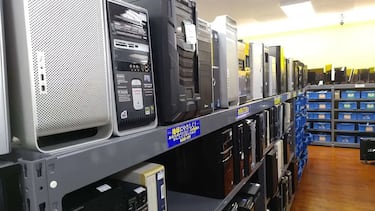
The initiative comes from Sofmap Gaming, a well-known retailer of PCs and components, which used its official account on X to send a direct and unusual message: “Please, if you replace yours, definitely sell your gaming PC to us…” The message was accompanied by a photograph showing almost empty shelves in its three-story store, a visual reflection of the product shortage currently affecting the market.
The store justified its request with a clear message: “Gaming PCs—even used ones are completely out of stock right now.” To encourage customers, Sofmap emphasized that it was buying back equipment “at very high prices” and that it would not be particularly picky about the type of computer. “Whether it’s a gaming desktop or laptop, or even a regular non-gaming PC—we buy just about any PC...,” the retailer said.
ゲーミングPC、中古も本当に在庫なくて今これ
— ソフマップゲーミング (@sofmap_gaming) January 7, 2026
あの、お願いなので買い替えたらぜひ弊社にゲーミングPCを売ってください...
結構高く買い取っていますので...
ゲーミングのデスクでもノートでも、もちろんゲーミングじゃない普通のでもPCなら大体買い取っているので... pic.twitter.com/IinBuGgRV7
Demand exceeds supply
Sofmap’s words paint a picture of a business that is unable to meet consumer demand. This is not an isolated incident: in November, there were reports of attempts by the Akihabara store to limit sales of key components such as RAM, SSDs, and hard drives, a sign that the pressure on supply has been building for some time.
The root of the problem lies largely in the memory shortage, which has hit the PC industry faster and harder than expected. Strong demand for memory from data center manufacturers dedicated to artificial intelligence, backed by large financial resources, caused the first price increases in the PC memory market. Both consumers and businesses depend on the same large manufacturers, which has amplified the impact.
Users began to notice the problem with DDR5 memory. Some modern kits have multiplied in price in just a few months, going from relatively affordable to very expensive if they are in stock. Given this situation, DDR4 is still seen as a possible refuge thanks to old stock and the fact that many users already have compatible modules, which has even led manufacturers to maintain and expand support for this platform.
Domino effect in the PC market
The memory shortage has not only affected components. Prices for pre-assembled PCs were the next link in the chain to be affected, and there are also rumors of restrictions on graphics cards with higher amounts of VRAM. Everything points to GPU replacement becoming more expensive, especially in light of possible delays in new generations.
In this context, the case of Sofmap suggests that even used PCs are being rapidly absorbed by the market. What was once a secondary segment has become a crucial source of supply for retailers.
To what extent is any PC useful?
Even so, not all old computers are valid. Although the store claims to buy “virtually any PC,” it is likely that retailers will prioritize relatively recent platforms, such as those based on DDR4 and compatible with the minimum requirements of Windows 11, including 8th generation Intel processors or AMD Ryzen 2000.
The market for very old PCs follows a different logic. In Japan, vintage computers have been increasing in value for some time, with a notable presence in second-hand stores such as Hard-Off. These machines, halfway between retro and modern, continue to arouse interest among both classic computer enthusiasts and those curious about new technologies.
Related stories
As long as scarcity persists, what was once considered obsolete can become a valuable resource. In Akihabara, at least for now, old is gold again.
Follow MeriStation USA on X (formerly known as Twitter). Your video game and entertainment website for all the news, updates, and breaking news from the world of video games, movies, series, manga, and anime. Previews, reviews, interviews, trailers, gameplay, podcasts and more! Follow us now!
Complete your personal details to comment