

CES 2026
CES 2026: AMD’s keynote lays out a future where AI runs directly on your PC
From local AI laptops to the Ryzen 7 9850X3D, AMD outlines its vision for the next decade of PCs.

CES 2026 has officially kicked off, and if AMD’s keynote is any indication, the era of the “AI PC” is no longer a futuristic concept—it is the new baseline reality, according to Dr. Lisa Su - AMD Chair and Chief Executive Officer. In a dense presentation packed with hardware reveals and software breakthroughs, AMD outlined a vision where Artificial Intelligence isn’t just a cloud-based chatbot, but a “multi-layered fabric” woven directly into the silicon of our devices. But beyond the buzzwords, the Silicon Valley-based company is aggressively targeting every type of user, promising to make computers faster, smarter, and significantly more efficient.
The New Standard: Ryzen AI 400 Series
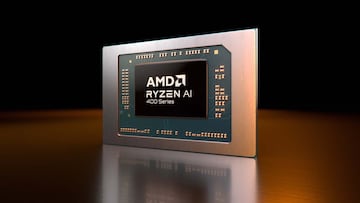
The heart of AMD’s consumer strategy is the Ryzen AI 400 series. These are the chips that will likely power your next laptop. Built on the Zen 5 architecture with up to 12 cores, 24 threads and featuring the new XDNA2 engine, running up to 5.2 GHz, these processors are designed to handle the heavy lifting of local AI without draining your battery thanks to Copilot+.
The key metric here is “60 TOPS” (Trillions of Operations Per Second). This means the processor is powerful enough to run advanced AI tasks—like real-time language translation or complex image generation—directly on your laptop, independent of the cloud. AMD claims this results in tangible time savings: up to 10 work days saved per year for developers and a 1.7x speed increase in content creation compared to competitors.
We are also seeing entirely new form factors emerge from this technology. One of the most intriguing reveals was the HP Elite Board G1A, the world’s first “AI PC” built entirely inside a compact keyboard. It’s a nod to the home computers of the 80s but packed with next-gen AI acceleration, proving that the desktop tower might soon be optional for many users.
Ryzen AI Max+: Unleashing the Developers
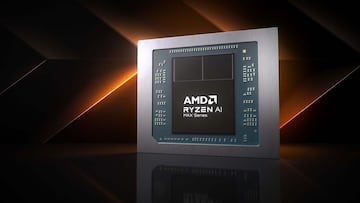
For those who feel constrained by standard laptops, AMD introduced a completely new category: the Ryzen AI Max+ series. These are not just slightly faster chips; they are monster APUs designed to bridge the gap between a high-end gaming rig and a workstation.
With up to 16 Zen 5 cores, 40 RDNA 3.5 graphics cores, and support for a massive 128GB of unified memory, these chips address a major bottleneck for AI developers and 3D artists: memory capacity. Typically, running large AI models (like LLMs) locally requires expensive enterprise hardware. The Max+ series allows creators to run these models “untethered,” free from cloud subscriptions or bulky desktop towers.
AMD didn’t shy away from comparisons, claiming the Max+ offers better performance-per-dollar than NVIDIA’s DGX Spark and outperforms Apple’s M5 MacBook Pro 14-inch in multitasking and gaming. To widen the net, two new models, the Max+ 392 and Max+ 388, were introduced to offer more choices for users who need that 40-core GPU power without breaking the bank.
The Ecosystem: Why Local AI Matters
Hardware is useless without software, and AMD spent significant time explaining why we should care about on-device AI. The company is pushing the ROCm 7 software stack, which has seen a 5x performance boost, to enable “local agents.”
Imagine a doctor’s office where an AI agent, running securely on a laptop (not the cloud), listens to patient intake, updates records, flags billing errors, and schedules appointments in real-time. For the average user, this means privacy and speed. Your financial data or medical records don’t need to leave your device for an AI to analyze them. Partnerships with companies like Liquid AI and iterate.ai demonstrated that local models can now bypass the character limits and subscription costs of cloud tools, offering “close to cloud quality” responses offline.
Gaming Dominance: The Ryzen 7 9850X3D
For the gamers tuning in, AMD dropped the biggest hammer of all: the Ryzen 7 9850X3D. The “X3D” line has long been the gold standard for gaming performance, and this new iteration pushes the envelope further.
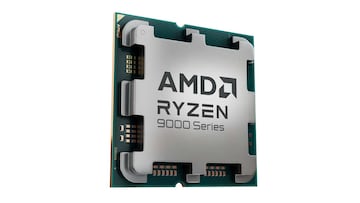
By combining the Zen 5 architecture with their 3D V-Cache technology, AMD has achieved a boost clock of 5.6 GHz—a 400 MHz jump over previous generations. The result? A claimed 27% performance uplift across a suite of 35+ games compared to the competition. This processor sits at the top of a complete Ryzen 9000 portfolio, which also includes the previously announced 9800X3D.
For enthusiasts, this confirms that AMD is not ceding the high-end desktop market. System integrators are already on board, with Alienware announcing the new Area 51 desktop featuring these chips.
FSR Redstone: Ray Tracing Without the Penalty
Finally, the visual experience is getting a massive overhaul with FSR Redstone. Launched in December, its full potential is being realized now. We all know the trade-off with Ray Tracing: it looks beautiful, but it kills your frame rate. FSR Redstone uses machine learning to eliminate that compromise.
AMD promises up to 4.7x higher performance in ray-traced scenarios. This allows gamers to play at resolutions “faster than regular 4K” while keeping all the hyper-realistic lighting effects active. With over 200 titles already supporting the tech, this is a direct challenge to NVIDIA’s DLSS dominance, aiming to democratize high-fidelity gaming for Radeon users.
AMD’s CES 2026 presentation was less about a single product and more about a unified ecosystem. From the “seamless intelligent continuum” of their AI PCs to the brute force of their gaming CPUs, the message is that technology should adapt to the user, not the other way around. Whether you are a developer training models on a train, a doctor automating paperwork, or a gamer chasing 300 FPS, AMD wants to be the silicon powering your life.
The Ryzen AI 400 series and new gaming processors are slated for release starting Q1 2026.
Follow MeriStation USA on X (formerly known as Twitter). Your video game and entertainment website for all the news, updates, and breaking news from the world of video games, movies, series, manga, and anime. Previews, reviews, interviews, trailers, gameplay, podcasts and more! Follow us now!