

Forget Squirtle and Charmander, these are the three most valuable common cards in the Pokémon TCG
Not all of the valuable cards in the Pokémon TCG are holographic or ultra-rare.

In the Pokémon TCG world, there are cards that are famous for the high prices they fetch. These are special cards, most of which are either extremely rare because of their print run, because they are from a special collection, or because of a flaw in their design. But what would you say if I told you that there are cards that are very common, but their prices are not as low as you think? I don’t mean that they have the same price as the most common Pokémon TCG cards, of course, but there’s a group of three cards that are so basic that you might overlook them, thinking they’re not worth that much, but you should consider them.
The three most expensive common cards in the Pokémon Trading Card Game are
3 - Bulbasaur: Base Set First Edition (Common)
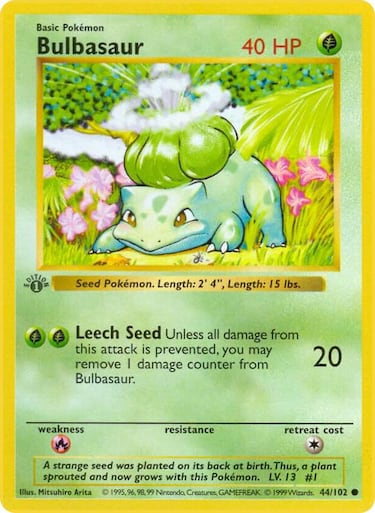
- Release date: 1999
- Price: $179.98
Though Charizard usually gets the spotlight, this first-edition Bulbasaur is a gem among common cards. Its value comes not only from the affection for the plant-type Starter Pokémon, but also from the difficulty of finding one in pristine condition after more than two decades. It’s a reminder that even the simplest Starters can have great value over time.
2 - Red Cheeks Pikachu: Base Set First Edition
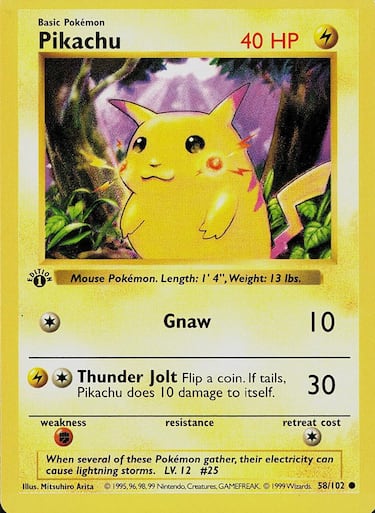
- Release date: 1999
- Price: $320
The Red-cheeked Pikachu is not only nostalgic, but also rare. Unlike its yellow-cheeked counterpart (which is more common), this version only appeared in the first runs of the Basic Set and in “shadowless” editions. Its aesthetics closer to the original design of the character and its rarity make its price skyrocket among collectors.
1- Voltorb: Professor Program Promos
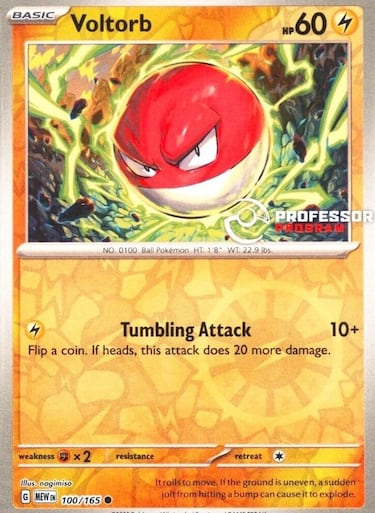
- Release date: 2023
- Price: $2000
Yes, you read that right: a regular Voltorb card worth more than $2,000. This card is part of the Pokémon Professor Program, an exclusive reward system for judges and mentors in the game. It took more than just opening an envelope: you had to be an active part of the competitive community, answer complex questions about the rules, and meet very specific criteria. Its rarity lies in the limited and demanding nature of its distribution.
Related stories
Follow MeriStation USA on X (formerly known as Twitter). Your video game and entertainment website for all the news, updates, and breaking news from the world of video games, movies, series, manga, and anime. Previews, reviews, interviews, trailers, gameplay, podcasts and more! Follow us now!
Complete your personal details to comment