

Pokémon
Pokémon Legends Z-A: First impressions of an adventure that seeks to revamp the formula
The return to Kalos breaks with tradition but blends in nostalgia.

Pokémon, as a video game, is at a point where it needs to reinvent itself. Since the franchise transitioned from living exclusively on handheld consoles to the hybrid Nintendo Switch in the last generation, it has faced more noticeable problems, as well as demands from a fan base that is increasingly seeking more.
Among the titles we had the opportunity to discover during this generation, the arrival of Pokémon Legends: Arceus stood out, a spin-off that gave Game Freak the freedom to experiment and work on mechanics that would later be implemented in the main games. It was the first time we experienced a Pokémon adventure in an open world, observing Pokémon in complete freedom, modifying the mechanics of capture and combat along the way, and taking a step forward.
Now, as part of our coverage of the 2025 Pokémon World Championships, we had the opportunity to be the first to play the demo of Pokémon Legends Z-A, games that take us back to the Kalos region and seek to revolutionize the way Pokémon battles are fought.
A fresh battle in the streets of Lumiose City
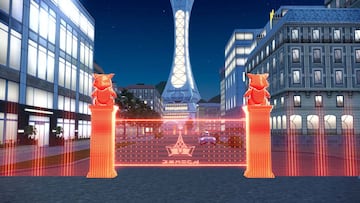
The demo we had was divided into two parts. The story was already well underway, and we found ourselves roaming the streets and alleys of Lumiose City. At nightfall, the Battle Zone is activated, creating special areas where Pokémon battles take place. Each victory earns us points in the Z-A Royale, and our first task in this section is to reach 1,000 points.
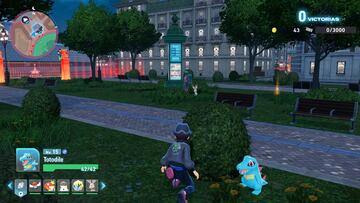
The elements we saw in Arceus are present, allowing us to switch our Pokémon instantly and make it follow us. Trainers will challenge us as soon as they see us pass by, causing the battle to start immediately, although we can also ambush them if we hide behind a box, almost as if it were a stealth game. But why is this important? Well, combat this time around aims to be more dynamic and agile.
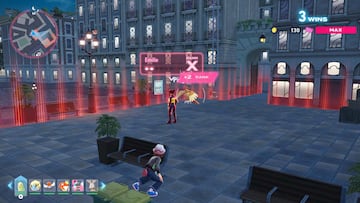
In Pokémon Legends Z-A, the classic turn-based system disappears and becomes something more dynamic, closer to an action RPG. We will continue to give instructions to our Pokémon as we move around the battle area, with its four abilities as usual, but once it attacks, there will be a waiting time before we can repeat it, forcing us to select another move or ability to perform. Similarly, we can switch to another Pokémon more quickly and take advantage of a type power or advantage without having to wait so long. An example of how this combat works is similar to what we saw in Xenoblade Chronicles and its arts, where we select the special abilities that our character can perform, but in a simplified way.
In addition, there is the way we can engage in combat with trainers, because if we take a stealthy route, we can attack their Pokémon first and gain an advantage. If we are aware of the advantages and disadvantages of each type, we can even think more carefully about our strategy for the first attack and do even more damage.
Mega Evolutions are back
When we first encountered the Kalos region 12 years ago, we were also introduced to one of the most significant changes Pokémon had undergone up to that point: Mega Evolutions. And now, they’re back. The second part of the demo had us on a mission to find a Rogue Mega Evolution, a wild Pokémon within the city that can activate Mega Evolution without a trainer. Here, we face off against an Absol, but thanks to receiving a Mega Ring, we can transform our Lucario into Mega Lucario.
The battle leaves us trapped in a limited area, where Mega Absol’s attacks not only affect our Pokémon but also our character. The movement of our two characters is important, as we have to take care of the health of both if we want to come out on top.

Before Lucario could transform into its Mega Evolved form, we had to attack Absol to make it release pieces of Mega Energy. These small pieces were very close to the wild Pokémon, so we had to approach as carefully as possible to obtain them. Once the bar was full, Lucario’s transformation could be activated, making its attacks stronger and allowing us to finally face this Pokémon. Of course, the Mega transformation didn’t last long enough, and we had to go back and obtain these spheres again.
The battle was very close, as one of Absol’s moves was a shockwave that damaged both Lucario and our character if we stood still. But in the end, we managed to win and capture Absol as part of our team.
The leap to Nintendo Switch 2
One of the most intriguing aspects is how this game runs on Nintendo Switch 2. And the truth is that the demo experience was very smooth, and details such as the grass and certain textures look much better. Combat, being dynamic, requires constant speed, and the frames per second remained consistent throughout.
Of course, it’s not a monumental graphical leap forward, but from what we saw in the demo, some areas don’t have so many elements on screen that they cause saturation or slow down performance.
Although the playtime was brief, Pokémon Legends: Z-A makes it clear that Game Freak wants to continue exploring new ways to experience Pokémon. Its more dynamic combat system, combat zone mechanics, and the reintroduction of mega evolutions offer a breath of fresh air that blends nostalgia with the need to reimagine the experience. With just under half an hour of playtime, we were left wanting to continue exploring what this return to Kalos has to offer.
Follow MeriStation USA on X (formerly known as Twitter). Your video game and entertainment website for all the news, updates, and breaking news from the world of video games, movies, series, manga, and anime. Previews, reviews, interviews, trailers, gameplay, podcasts and more! Follow us now!