

The beloved Nintendo character made the GameCube version of Soulcalibur II a smash hit 22 years ago
We remember how the GameCube version of Soulcalibur II was the most special of all for one main reason: Link, from The Legend of Zelda.


Soulcalibur II was one of the best fighting games of the sixth generation of consoles. Its release left many speechless, thanks to its highly entertaining gameplay, cutting-edge graphics, and wide variety of modes. It was a multiplatform game released on PlayStation 2, Xbox, and GameCube, and although the Nintendo console was the worst-selling of the three, it was the machine where this title had the greatest impact due to an incredible attraction: Link, from The Legend of Zelda, was an exclusive fighter in this version.
The GameCube version of Soulcalibur II was the most memorable and relevant thanks to its guest star: Link from The Legend of Zelda.
When it arrived on home consoles in 2003, Soulcalibur II turned the fighting genre upside down, as evidenced by its scores above 90 on Metacritic. It was the third installment in the franchise, and the gameplay formula had been refined to unimaginable heights. The home version of this video game was released on PlayStation 2, Xbox, and GameCube, and Namco had a unique idea to differentiate each one: add a different exclusive fighter to each platform.
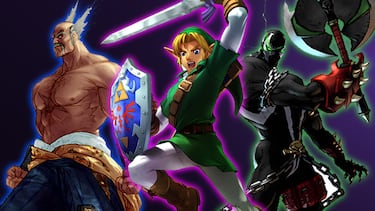
The fighters chosen as guest characters for the PS2 and Xbox versions were, respectively, Heihachi Mishima (Tekken series) and Spawn (a superhero created by Todd McFarlane, who also designed the character Necrid in this game). However, the highlight was in the GameCube version, where Link himself from the Zelda series was the guest star. This was not only a great incentive for fans of the franchise itself, but also attracted fans of both Zelda and Nintendo in general.
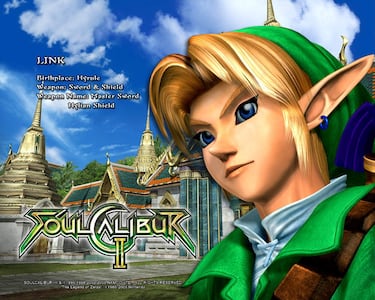
Although it wasn’t the best-selling version of the game globally, in the United States there was a very curious overtaking: the GameCube version managed to outsell the PlayStation 2 version. While GC amassed a million copies sold, on PS2 the game fell slightly short of a million, with 970,000 units. This peculiar milestone demonstrated the great success of including the adult Link from The Legend of Zelda: Ocarina of Time (1998) as an exclusive GameCube extra, although it is true that this crossover is not canon within the Zelda chronology.
Of course, the appeal wasn’t just in controlling this fighter, but also in being able to freely use many of his most iconic weapons and tools, such as the Master Sword, the Hylian Shield, the bow and arrows, his boomerang, and even bombs, making him as dangerous as he was unpredictable. Furthermore, for many, it also marked the character’s true coming of age: although he had already appeared in the first two installments of the Smash Bros. series, having him as a contender in a serious and conventional fighting game allowed many to discover Link as a seasoned duelist.
Related stories
The positive reception of this strategy of differentiating between versions meant that future installments of Soulcalibur continued to add guest characters, such as Yoda, Darth Vader, and Starkiller from Star Wars in Soulcalibur IV (2008), Ezio Auditore from Assassin’s Creed in Soulcalibur V (2012), and Geralt of Rivia from The Witcher in Soulcalibur VI (2018). In a way, Link was the spearhead of what would later become one of the hallmarks of the series.
Follow MeriStation USA on X (formerly known as Twitter). Your video game and entertainment website for all the news, updates, and breaking news from the world of video games, movies, series, manga, and anime. Previews, reviews, interviews, trailers, gameplay, podcasts and more! Follow us now!
Complete your personal details to comment