

The key ingredient in Ghost of Yotei that Tsushima lacked: ready to revolutionize immersion
Ghost of Yotei takes gaming immersion to new heights, literally! This is how verticality is revolutionizing the genre.
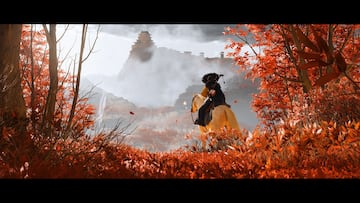
When Ghost of Tsushima graced our screens, it transported players to a stunningly crafted rendition of feudal Japan. Its sweeping landscapes, poetic combat, and carefully woven narrative set the bar high for open-world games. However, despite its successes, there was one dimension that Ghost of Tsushima largely left unexplored, literally. That’s where Ghost of Yotei comes in, redefining immersion with its innovative approach to verticality.
And Ghost of Yotei builds upon the foundation of open-world exploration but takes it to thrilling new heights, quite literally. With towering cliffs, snow-capped peaks, and intricate vertical structures, the game doesn’t just ask you to explore horizontally but compels you to ascend and descend through a world that feels alive in every direction.
The vertical design isn’t just about spectacle; it’s deeply integrated into gameplay. Players must master advanced climbing techniques, use tools like grappling hooks, and strategize their movements across treacherous terrains. This isn’t a mere addition to the formula but a transformative experience that ensures every ascent brings a sense of accomplishment, danger, and discovery.
What Tsushima mastered, Yotei expands upon
There’s no denying that Ghost of Tsushima mastered the art of immersive landscapes. Its picturesque fields, serene shrines, and dense forests brought ancient Japan to life in breathtaking ways. But movement often felt grounded, a deliberate choice, perhaps, to stay true to the era’s realism.
Ghost of Yotei, on the other hand, takes a bold leap forward. The game allows players to navigate sprawling heights, from ancient temples perched precariously on cliff edges to snowy mountaintops where the wind howls in your ears. This verticality isn’t just a design choice; it deepens the immersion, making players feel like a true part of the world rather than mere observers.
Scaling walls, jumping across ledges, and using cleverly placed environmental features to reach higher ground adds a layer of challenge that keeps the gameplay dynamic. It’s a constant test of skill and strategy—an element that was less emphasized in Ghost of Tsushima. In Ghost of Yotei, every climb tells a story, every peak offers a reward, and every descent demands caution.
The verticality also enhances storytelling. Imagine uncovering secrets hidden in a remote cliffside shrine or battling enemies in a dramatic free-fall arena. These moments, made possible by the game’s multi-dimensional design, promise to set a new standard for open-world games.
As players continue to demand richer, more immersive experiences, Ghost of Yotei represents a significant shift in how developers approach world-building. By fully embracing verticality, the game creates a world that feels expansive, interconnected, and full of possibilities. It challenges other developers to think beyond the horizon and craft worlds that are as deep as they are tall.
While Ghost of Tsushima captured the hearts of gamers with its artistry and soul, Ghost of Yotei dares to climb higher, literally and figuratively. Its key ingredient, the revolutionary embrace of verticality, is set to redefine immersion and transform how we experience open-world games. As the gaming industry evolves, one thing is clear: the journey isn’t just forward, it’s upward.
Related stories

Follow MeriStation USA on X (formerly known as Twitter). Your video game and entertainment website for all the news, updates, and breaking news from the world of video games, movies, series, manga, and anime. Previews, reviews, interviews, trailers, gameplay, podcasts and more! Follow us now!
Complete your personal details to comment