

The keys to Anthem’s failure: BioWare’s risky gamble that is no longer playable after the closure of its servers
As of January 12, 2026, Anthem will be unplayable after its official servers are closed. We detail why this ambitious venture by EA and BioWare, launched in 2019, failed.


Anthem is, without a doubt, the biggest stain on BioWare’s track record, which has seen better days. While in the past this developer gave us quality stories such as the two KOTOR installments, Jade Empire, and the Mass Effect trilogy, the title we have before us showed that most of the talent fled in search of greener pastures. The announcement of the definitive closure of its servers on January 12, 2026, which will render it unplayable for all intents and purposes, is the final nail in the coffin of a project that bit off more than it could chew. In this article, we review the key factors behind its failure.
Chronicle of a death foretold: Anthem’s complicated development doomed the video game even before it was released
The state in which Anthem reached the market should come as no surprise if we have followed its creation chapter by chapter. Development on this title began in 2012, shortly after the release of Mass Effect 3. The studio’s original intention was to obtain a blank check, backed by the commercial and critical success of the Mass Effect trilogy. To this end, the idea was sold to Electronic Arts’ management as “a live service game with the potential to generate profits comparable to those of FIFA.”
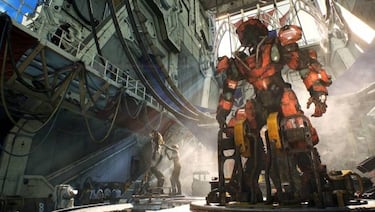
The proposal was too tempting to turn down, and with Casey Hudson, executive producer of Mass Effect, at the helm, the project was soon given the green light. Unfortunately, even at these early stages of development, there was no clear vision beyond the basic premise: players would use Iron Man-style exosuits to survive all kinds of dangers.
As time went by, problems and concerns grew about whether it was really possible to create a game with these characteristics using the Frostbite 3 engine, mainly used in the Battlefield franchise. EA vehemently insisted on continuing to rely on DICE technology, making it easier for studios to share this proprietary software instead of using Unreal Engine as in the Mass Effect games.
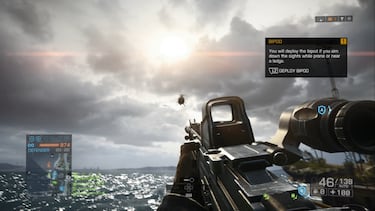
In 2014, Hudson left BioWare, and it soon became clear that without his strong leadership style, development was not progressing. To make matters worse, in 2015, David Gaider, writer of Dragon Age, was assigned the difficult task of making Anthem’s plot resemble those of Mass Effect and Dragon Age itself as a lifeline to attract audiences from these two other studio franchises. However, Gaider also left BioWare in 2016, so the plot once again strayed from the company’s previous titles, damaging the studio’s morale by discarding so much work already done.
The drama continued, and Frostbite caused developers a lot of headaches for one simple reason: it wasn’t the right engine for this type of video game, as it was designed for first-person shooter titles. This forced the removal of survival game mechanics and concepts. Adding insult to injury, many BioWare employees who were already familiar with using this engine were reassigned to support the new FIFA releases, where it was also used, diverting resources from one project to another and leaving Anthem with minimal manpower.

The development process was arduous, and in hindsight, Anthem came to market too polished for the hardships that employees had to endure due to contradictory guidelines that forced the work back to square one time and time again. Ultimately, it was a textbook example of how not to do things in this industry.
The harsh reality check when Anthem hit stores
BioWare’s reputation was already somewhat tarnished in 2019 when Anthem was released. The culprit was Mass Effect: Andromeda (2017), conceived as the fourth installment of its acclaimed saga and not as a spin-off. However, this video game also had a tumultuous production that led to an uneven result, affecting sales and the reputation of its developers.
For this reason, when players got to try Anthem, they couldn’t believe what they were seeing on their screens: BioWare, the same studio that had tasted success not so long ago thanks to its outstanding titles, had disappointed them once again. Namely, Anthem was too ambitious for its own good, and its open-world, role-playing, action game proposal ended up as a huge pile of broken promises.
Although critics praised some aspects of the game, such as its combat, its focus on direct action, its intuitive flight controls, and its visuals, they were not so forgiving of other elements, such as its basic gameplay designed to be as addictive as mobile games, the need to be permanently connected to the internet, and its disappointing and simplistic plot. It simply didn’t feel like a video game developed by BioWare, and in a way, it wasn’t, due to the talent drain that occurred during its creation.
Although Anthem sold five million units, this figure fell well short of Electronic Arts’ considerably more optimistic sales forecasts. In 2020, an attempt was made to reverse the situation by refining the core gameplay, but development ceased just a year later due to the COVID pandemic. It seemed as if fate was determined to see this title fail at all costs.
Related stories
In mid-2025, Anthem was removed from digital stores, with the announcement that the game’s servers would be shut down permanently on January 12, 2026. This means that all versions, both physical and digital, will stop working once the deadline arrives. It’s not that online multiplayer options will be removed, but rather that they will be completely inaccessible because they require a permanent connection, even for single-player mode.
Follow MeriStation USA on X (formerly known as Twitter). Your video game and entertainment website for all the news, updates, and breaking news from the world of video games, movies, series, manga, and anime. Previews, reviews, interviews, trailers, gameplay, podcasts and more! Follow us now!
Complete your personal details to comment