


Two games, one vision: Crystal Dynamics plans the future of Tomb Raider
Crystal Dynamics explains how both projects share a common canon, technology, and a unified vision for Lara Croft.

Last week, during The Game Awards, Amazon Game Studios surprised us. Although we already knew that a new Tomb Raider title was going to be presented during the most important video game gala, we didn’t expect there to be two announcements. Tomb Raider: Catalyst and Tomb Raider: Legacy of Atlantis are the next titles featuring the most famous archaeologist in video games, who is back in her most classic format, just as we knew her in 1996. After its presentation last week, we had the opportunity to talk to Scot Amos, Head of Studio, and Will Kerslake, Game Director at Crystal Dynamics, who answered the most important questions from the world press. Here are the most relevant details from that meeting.

What do these two games represent for Crystal Dynamics?
The choice of these games is interesting, as one represents a reimagining of Lara Croft’s first adventure, while the other represents her most recent adventure. Two diametrically opposed points in the famous archaeologist’s life.
According to Scot Amos, Tomb Raider Catalyst represents “a new chapter in the adventures of Lara Croft.” The title is designed to be an experience that new players can enter without prior knowledge of its history, but it also seeks to satisfy longtime fans. In addition, it makes it the most extensive Tomb Raider game the studio has developed to date.
Although many details of the game are still under wraps, we were told that more information will be revealed soon. The adventure will take us to northern India, a place Lara has already visited in previous adventures, which is “a region that offers a vast variety of settings just waiting to be explored.” As for the hook we see in the trailer, it’s just one of many clues about what the game will feature.
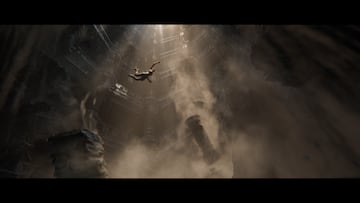
Something that feels beyond a remake
Tomb Raider: Legacy of Atlantis is also in development. According to the studio head, this title is a “love letter to fans” celebrating the franchise’s 30th anniversary, seeking to honor the original DNA established by Core Design, the first studio behind the game. Beyond a reimagining made with Unreal Engine 5, the goal is to modernize the gameplay experience and visual fidelity to reach a point where it feels like playing in 1996, but with the standards of a modern game.
One interesting detail from Crystal Dynamics is that at no point in their communication did they use the word “remake.” For them, it is a reimagining that seeks to honor the legacy of the original game. Part of this philosophy involves retaining many of the classic elements, but recognizing that “30 years of technological advances have passed since 1996.” Under this idea, Legacy of Atlantis was always intended to be ready for the franchise’s 30th anniversary.

A unified vision for the future of Lara Croft
Although Legacy of Atlantis and Catalyst are being developed by different studios —Flying Wild Hog and Crystal Dynamics, respectively— we were told that both teams are closely connected, sharing technology, resources, and assets. All of this is coordinated by leadership teams and a shared vision to ensure that “everything is on the right track, everything is canon, and everything makes sense.”
Follow MeriStation USA on X (formerly known as Twitter). Your video game and entertainment website for all the news, updates, and breaking news from the world of video games, movies, series, manga, and anime. Previews, reviews, interviews, trailers, gameplay, podcasts and more! Follow us now!