

United States does not want any more problems with Russia and is already planning to say goodbye to GPS navigation: Boeing has already found a solution
The US company is moving forward with quantum navigation, a precise and unblockable system that seeks to replace satellite signals in conflict scenarios.
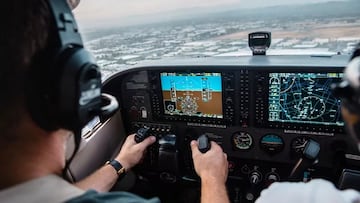
The war in Ukraine has exposed a key vulnerability in modern aviation: dependence on the Global Positioning System (GPS). The recent incident in which the plane carrying European Commission President Ursula von der Leyen had to resort to paper maps to land after a signal blockage attributed to Russia has set off alarm bells in the United States and Europe. The conclusion is clear: in times of war, GPS can become useless.
In this context, Boeing has taken a step forward and is already testing a system that could transform air navigation: quantum navigation.
The fragility of GPS
GPS, widely used in commercial and military aviation, works thanks to a network of satellites that allows the exact position of a moving object to be determined with a margin of error of a few meters. However, this radio signal can be relatively easily jammed by more powerful interference, making the system a vulnerable target in conflict situations.

The war in Ukraine has shown that both Russia and other powers are capable of jamming these signals, not only to stop military drones, but also affecting civil aviation.
The quantum alternative
Faced with this vulnerability, different countries are exploring alternatives: from quantum magnetometers to terrestrial telecommunications networks such as 4G. But the system that seems to be at the most advanced stage is quantum navigation, which offers decisive advantages.
This method is based on the use of atoms to calculate the direction of movement in relation to a starting point. Its accuracy is not measured in meters, as with GPS, but in millimeters. Furthermore, as it does not rely on satellites or emit signals, it is impossible for an adversary to intercept or manipulate.
Boeing’s role
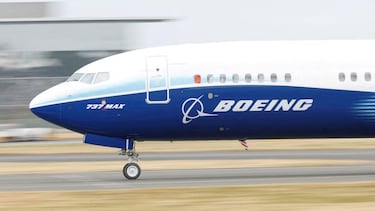
Boeing has installed a six-axis Quantum Inertial Measurement Unit (IMU) on a Beechcraft 1900D aircraft, which it used to conduct test flights in Saint Louis, United States. The system, which uses atomic interferometry to measure rotations and accelerations through quantum sensors, allowed the aircraft to orient itself correctly without GPS support.
The US company is now looking to test quantum navigation in more demanding scenarios: complex maneuvers such as loops or zigzag trajectories. Once this challenge has been overcome, the technology will be ready to be integrated as a replacement for GPS in aircraft.
A race accelerated by war
Related stories
The conflict in Ukraine and growing strategic competition between powers have served as catalysts to accelerate the development of these technologies. Although still in the testing phase, quantum navigation is already shaping up to be one of the key tools in future air safety, with the United States and Boeing leading the race.
Follow MeriStation USA on X (formerly known as Twitter). Your video game and entertainment website for all the news, updates, and breaking news from the world of video games, movies, series, manga, and anime. Previews, reviews, interviews, trailers, gameplay, podcasts and more! Follow us now!
Complete your personal details to comment