


Water is under threat in Oregon due to pollution levels, and massive data centers are in the crosshairs
A local commissioner uncovered extreme nitrate levels in Morrow County wells as the data center boom drives up consumption and pollution of the aquifer.


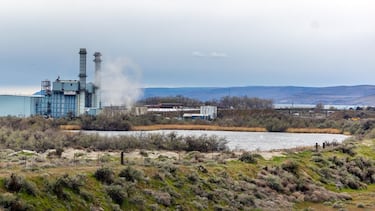
In a semi-arid corner of eastern Oregon, the promise of digital riches coexists with a very basic fear: turning on the tap at home. An extensive Rolling Stone report details how Morrow County, the epicenter of industrial farms and Amazon Web Services data campuses, has become a textbook case of how the cloud economy can exacerbate a water crisis that has been brewing for decades.
A key aquifer turned into a health risk
The Lower Umatilla Basin aquifer extends beneath Morrow County and is the sole source of water for up to 45,000 people who depend on private wells. Since the early 1990s, Oregon environmental authorities have detected a steady increase in nitrates, a byproduct of chemical fertilizers, manure from large farms, and wastewater from the powerful local agri-food industry.
The story takes a dramatic turn in 2022, when Jim Doherty, a rancher and Republican county commissioner, begins to run into neighbors at the supermarket who talk about strange cancers, kidney failure, or a string of miscarriages. He then decides to take samples from six random houses himself: all six exceed the federal limit for nitrates in drinking water. He expands the sampling to 70 wells, and 68 are contaminated, with an average almost four times higher than the recommended maximum.
Door-to-door visits, many of them to families of agricultural workers and processing plant employees, leave a trail of testimonies that are difficult to ignore: dozens of miscarriages, neighbors who have undergone surgery for throat cancer without ever having smoked, and people living with only one kidney. Organizations such as Oregon Rural Action openly compare the case to Flint, Michigan, both because of the slow institutional response and the profile of the victims: communities with little political and economic power.
The data center boom fuels the vicious cycle
For years, the official narrative focused almost exclusively on agriculture: endless irrigation pivots, potatoes for McDonald’s, mega dairy farms that turn the desert into a green field with fertilizer. But Amazon’s arrival in 2011, with the first Amazon Web Services data center, added another crucial piece to the puzzle. Today, the company operates several data centers in the area and has agreements to build more.
Servers need to be kept between 21 and 27 degrees Celsius to function properly, and in Morrow County they are cooled with water drawn from the same aquifer used by local residents. That water is already loaded with nitrates; as it passes through the cooling systems, some of the liquid evaporates, but the compounds remain and become concentrated. The return water is then mixed with industrial wastewater in the giant lagoons at the Port of Morrow and sprayed onto fields as liquid fertilizer, even in winter when there are no crops to absorb it. The result, according to hydrologists quoted by Rolling Stone, is an accelerated “washing” of nitrates into the subsoil: the more it is irrigated, the faster the aquifer is poisoned.

Amazon maintains that the water quality crisis dates back decades before its arrival, that it does not add nitrates in its processes, and that the volume it uses is only a small fraction of the system, insufficient to affect pollution significantly. The company insists that its role is focused on investing, creating jobs, and collaborating with the community during the emergency.
Corruption enters the picture
Meanwhile, another front has opened up: a state investigation and a lawsuit filed by the Oregon attorney general accuse former county officials of using insider information to take over the fiber optic company that serves data centers, taking advantage of Amazon’s expansion in the area that they themselves approved. At the same time, attorney Steve Berman has filed a class action lawsuit on behalf of residents against several agribusinesses, with the option open also to include Amazon in the future.
Related stories
For many families in Morrow County, this is no longer an abstract debate about AI, the cloud, or competitiveness, but something terribly mundane: filling jugs every two weeks, making sure children don’t drink from the tap, and wondering how it got to this point. A warning to sailors about a vital resource, such as water, which we continue to take for granted in many parts of the world.
Follow MeriStation USA on X (formerly known as Twitter). Your video game and entertainment website for all the news, updates, and breaking news from the world of video games, movies, series, manga, and anime. Previews, reviews, interviews, trailers, gameplay, podcasts and more! Follow us now!
Complete your personal details to comment