


Are we witnessing the end of the curveball in MLB?
Modern day pitchers are shifting towards speed and velocity with the fastball with the classic curveball become something of a dying breed.
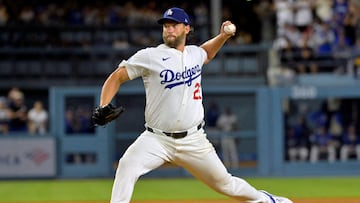
In MLB, the pitching mound is one of the key focal points of the game and has always drawn attention with one particular pitch always stealing the spotlight. It’s not a show of power, but rather an artistic display: the curveball. A pitch that doesn’t need visceral velocity, but rather seduces the batter with a visual deception. It comes out of the hand with the delicacy of a sculptor and falls as if gravity were conspiring to mock time and space.
In many game situations, throwing a good curveball is like reciting poetry in the middle of a street fight. It takes technique, confidence, and above all, the desire to tame the game’s violence with intelligence. The angle is perfect, the spin is hypnotic, and the sudden drop leaves hitters frozen or swinging in the air. It’s the magic that turns pitchers into artists.

For a century and a half, the curveball was the mound’s best-kept secret. Invented, they say, in 1863 by a kid named Candy Cummings who threw seashells into the ocean, it was the first pitch to transform pitchers into magicians, not warriors. The Hall of Fame is filled with arms that transformed a simple ball into an instrument of deception: Bert Blyleven, Sandy Koufax, Nolan Ryan, and soon, Clayton Kershaw. Owners of a weapon that turned batters into statues.
Back in 2010, Sandy Koufax gave Clayton Kershaw tips on how to spin his curveball.
— MLB (@MLB) July 2, 2025
Now, he's just 3 strikeouts shy of 3,000. pic.twitter.com/PNiWFCRPow
But every empire has its fall.
The twilight of the curve
The curveball has been wiped off the map at a dizzying pace. In 2019, it accounted for 10.7 percent of pitches in the Major Leagues. Today, it barely survives at 8.5 percent according to data compiled by the AP. Last year saw its lowest usage since MLB began tracking pitches in 2008, and in 2024 alone, 22,962 curveballs were fielded. It’s a silent exodus, a disappearance camouflaged by the game’s evolution.
The (former Oakland) Athletics, a paradigm of baseball modernity for their use of sabermetrics and other measuring instruments, throw curveballs on just 2.5 percent of their pitches.
The dictatorship of radar
Modern baseball has shifted its priorities. Speed, once an attribute, has become an obsession. In 2008, there were 214 pitches thrown over 100 miles per hour. By 2024, there were 3,880, a multiplication that transforms every game into a flamethrower competition.
Paul Skenes, Jacob Misiorowski, Chase Burns, are some of the pitchers who make up the new generation who have cannons in their arms.
The average fastball travels at a record 94.4 mph. Sliders, sweepers, and cutters now represent more than 22% of pitches, up from just 14% in 2008. Coaches, like Scott Emerson of the Athletics, point out this.
“The failed swing has become more important than deception.” The search for horizontal movement, the slider’s violence in the lower part of the zone, replaced the vertical charm of the curveball.
The best Curveball in baseball belongs to Ben Brown with the @Cubs
— Adam Naliwajko (@AdamNaliwajko) May 28, 2024
(According to Baseball Savant's RV)
What makes it so special? 🤔
A thread 🧵
1/ pic.twitter.com/TrS53CdAaf
As starting pitchers are forced out after 85 pitches and five innings, patience for developing curveballs has evaporated. It’s easier to teach a slider than to master the fine art of throwing a roller-coaster ball.
History dictates that legendary pitchers were more than just brute force. Koufax dominated with curveballs. Kershaw built a Hall of Fame career with the slider-curveball combo. Max Fried conquered the Bronx, but despite that, today, that tradition is on its way out.
Max Fried, Beautiful 76mph Curveball. 😍 pic.twitter.com/uDjI9nFYvL
— Rob Friedman (@PitchingNinja) June 26, 2025
Even those who bet on curveballs, like the Rockies, who lead the way in curveball frequency at 15.6%, do so without reward: a team on its way to a historic 125-loss record, reinforcing the trend that the curveball is a beautiful art, but ineffective in the brutality of the modern game.
In the pursuit of speed, the game becomes shorter, more homogeneous, more predictable. The curve survives as the last poem in an industry dominated by speed, but for how long?
Related stories
Get your game on! Whether you’re into NFL touchdowns, NBA buzzer-beaters, world-class soccer goals, or MLB home runs, our app has it all.
Dive into live coverage, expert insights, breaking news, exclusive videos, and more – plus, stay updated on the latest in current affairs and entertainment. Download now for all-access coverage, right at your fingertips – anytime, anywhere.
Complete your personal details to comment