


Baseball’s missing league: Why it took decades for women’s pro baseball to return
After more than 70 years, professional women’s baseball is finally returning to the U.S. in 2026 with the historic Women’s Pro Baseball League.
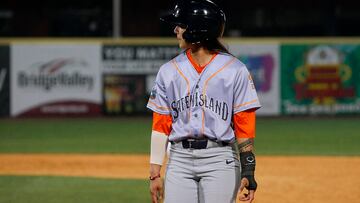

As Women’s History Month unfolds and International Women’s Day approaches, a long-overdue development is on the horizon for America’s favorite pastime. Professional women’s baseball is returning.
After decades in which women’s baseball opportunities were limited primarily to amateur, international, or softball play, the Women’s Pro Baseball League (WPBL) is set to debut in August 2026, marking the first top-level women’s baseball league in the United States since the 1950s.
The inaugural season of the WPBL begins in just five months. 🤩 pic.twitter.com/E9EpzgqEQ2
— Women's Pro Baseball League (@wpbl_official) March 1, 2026
The emergence of the WPBL is a cultural milestone that highlights both the barriers women have faced in baseball and the progress now being made.
A brief history of women’s professional baseball and why it disappeared
Women have played baseball in the U.S. for more than a century, with organized teams dating back to at least 1866. But sustained professional opportunities have been rare.
The first major attempt came during World War II, when male baseball stars were drafted into military service and executives sought ways to keep the sport in the public eye. That led to the founding of the All-American Girls Professional Baseball League (AAGPBL) in 1943. The league, featured as the backdrop for the iconic film “A League of Their Own”, reached peak attendance of nearly 910,000 fans in 1948 and lasted for 12 seasons.
Happy 99th birthday to former All American Girls Professional Baseball League (@AAGPBL) player, Maybelle Blair!
— Billie Jean King (@BillieJeanKing) January 16, 2026
She was also an inspiration for the movie, "A League of Their Own."
I had the honor of meeting her at the 2022 ESPYS. pic.twitter.com/wVsOTk786j
Despite its success, the AAGPBL folded in 1954 as men’s professional baseball returned to center stage and fan interest shifted away.
Subsequent attempts at women’s professional baseball have sputtered:
- The National Girls Baseball League operated primarily in the Chicago area from 1944 to 1954, though it maintained a different underhand pitching style and was regional rather than national.
- The International Girls Baseball League made a brief appearance in 1952–53 but folded after a partial season.
- Ladies League Baseball, launched in 1997, was the first post-AAGPBL pro league but folded by 1998, largely due to financial and operational challenges.
For decades, women with elite baseball talent were left without a professional home in the U.S., even as opportunities in other women’s sports expanded.
Why has women’s pro baseball been so elusive?
There are several reasons why a sustained professional women’s baseball league did not take hold for more than half a century:
- Market economics and media exposure: Unlike the post-war boom that supported men’s baseball, women’s leagues have historically struggled to secure TV deals, sponsorship dollars, and gate revenue sufficient to sustain professional operations over time. The AAGPBL itself folded as professional men’s baseball returned and fan attention shifted.
- Cultural expectations and opportunity funnels: For much of the 20th century, girls interested in diamond sports were often directed toward softball, not baseball. While both are bat-and-ball sports, softball’s pitching style, field dimensions, and organizational structure made it the “default” women’s path, leaving baseball without an established developmental pipeline.
- Infrastructure and support: Professional sports require stable infrastructure, from youth development to collegiate competition to minor leagues. While college softball and women’s basketball have flourished, the broader ecosystem for women’s baseball has not had the same depth of organized support, making professional sustainability harder.
The pioneers and visionaries behind the WPBL
The WPBL is the product of years of advocacy, leadership, and consistent pressure to expand opportunities for women in baseball.
Justine Siegal, one of the league’s co-founders, is a figure whose story reflects how far the sport has come. Siegal became the first woman to coach a professional men’s baseball team when she served as a guest coach for the Oakland Athletics in 2015, a breakthrough moment in baseball coaching history.
Justine Siegal is not only our co-founder, but the first woman to coach a men’s pro baseball team and throw batting practice to an MLB team. pic.twitter.com/i9u71bHjmy
— Women's Pro Baseball League (@wpbl_official) November 7, 2024
Alongside her co-founder Keith Stein, Siegal has worked to build a league that showcases elite talent and offers a professional platform for women who have long excelled in international competition and at amateur levels. The WPBL’s ownership and leadership team also include industry figures committed to growing women’s baseball and connecting it with fans nationwide.
At tryouts across the country in 2025, thousands turned out for the chance to play professional baseball, demonstrating the depth of talent and desire that has long gone untapped. Players like Kelsie Whitmore, who made history as the first woman to play professional baseball in an MLB-affiliated league, are now central figures in the WPBL story.
Eighty-year-old Maybelle Blair, a former player from the original AAGPBL, even participated in early WPBL events, symbolically passing the torch from one generation of women athletes to the next.
What to expect in the 2026 inaugural season
The WPBL is set to debut in August 2026, with a regular season followed by playoffs and a championship. The league will feature four teams representing major U.S. markets - Boston, New York, Los Angeles and San Francisco.
Games are scheduled to be played at Robin Roberts Stadium in Springfield, Illinois, a location chosen for its historic connection to women’s baseball and central geography.
Early player drafts and rosters include athletes from around the world, including international talent, highlighting not just U.S. growth but global interest in women’s baseball.
Why 2026 could be a turning point
After decades without a stable professional outlet, the WPBL arrives at a moment when women’s sports are growing more visible and commercially successful than ever. Women’s basketball, soccer, and hockey have all shown that sustained fan interest and media investment can fuel professional success, and the WPBL hopes to replicate that model in baseball.
As International Women’s Day approaches, the league’s launch isn’t just about a new summer sport. It’s about representation, opportunity and finally giving women a stage in baseball long denied to them.
For the generations who came before - from early 20th-century pioneers to the stars of today - the WPBL’s debut represents not just a new league, but a new era for women in America’s pastime.
Related stories


Get closer to the game! Whether you like your soccer of the European variety or that on this side of the pond, our AS USA app has it all. Dive into live coverage, expert insights, breaking news, exclusive videos, and more. Plus, stay updated on NFL, NBA and all other big sports stories as well as the latest in current affairs and entertainment. Download now for all-access coverage, right at your fingertips – anytime, anywhere.
And there’s more: check out our TikTok and Instagram reels for bite-sized visual takes on all the biggest soccer news and insights.
Complete your personal details to comment