


Why the Orioles game ended on an ABS challenge - MLB rule explained
The Baltimore Orioles ended their game against the Texas Rangers on MLB’s first-ever ABS challenge. Here’s how it happened.
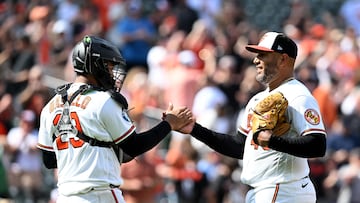

The Baltimore Orioles made a bit of MLB history this week. In an 8-3 win over the Texas Rangers on Wednesday, the game ended on the league’s first-ever Automated Ball-Strike (ABS) challenge.
With two outs in the ninth inning, a pitch initially called a ball was challenged by Orioles catcher Samuel Basallo. Moments later, the call was overturned to a strike, ending the game on the spot.
The Orioles just became the first team in MLB history to win a game on an ABS challenge.pic.twitter.com/scGYlvZCQf
— Front Office Sports (@FOS) April 1, 2026
It was a rare and dramatic finish. And it demonstrated that MLB’s new challenge system is no longer just experimental, but it’s now already deciding games.
What is the MLB’s ABS challenge system?
MLB’s Automated Ball-Strike system uses Hawk-Eye tracking technology to determine whether a pitch crosses the strike zone. But unlike a full “robo-ump” system, human umpires still make the initial calls.
The difference is that now, players have the ability to challenge those calls in real time.
Each team starts a game with two challenges, and only the pitcher, catcher, or batter can initiate one. To do so, they simply tap their helmet or cap immediately after the pitch. If the challenge is successful, the team keeps it. If not, they lose one.
The ABS Challenge System Powered by @TMobile was used for the first time in regular season MLB games during Opening Week. Here is a refresher of the rules and statistics collected over the past 5 days:
— MLB (@MLB) March 30, 2026
Total challenges: 54% overturn rate (175 attempts)
Catchers: 64% overturn… pic.twitter.com/2n6DtT2Sc5
Why the Orioles play was so unusual
While ABS challenges have already been used multiple times early in the season, this was the first instance where one directly ended a game. Instead of a controversial call lingering as a “what if,” the system immediately corrected it, and in doing so, removed any debate about the final pitch.
At the same time, it also introduced a new reality, that games can now hinge on a quick decision to challenge, even in the final seconds. The Orioles’ decision to challenge in that moment was strategic.
Teams now have to think carefully about when to use their challenges, especially late in games. Holding onto one could mean having the chance to overturn a critical call. Using it too early could leave you without an option later on when it might matter more. In this case, Basallo saw an opportunity and took it, turning a routine ball call into a game-ending strike.
Not quite “robo-umps”...but getting closer
MLB has tested fully automated strike zones in the minor leagues, but feedback from players and fans led the league to favor a challenge-based system instead. That means the human element is still very much part of the game, just with a technological safety net.
The Orioles win show exactly why the system was introduced - to correct clear misses without removing umpires entirely. The ABS challenge system has officially moved from experiment to impact, and if this week is any indication, it won’t be the last time a game is decided this way.
Related stories


Get closer to the game! Whether you like your soccer of the European variety or that on this side of the pond, our AS USA app has it all. Dive into live coverage, expert insights, breaking news, exclusive videos, and more. Plus, stay updated on NFL, NBA and all other big sports stories as well as the latest in current affairs and entertainment. Download now for all-access coverage, right at your fingertips – anytime, anywhere.
And there’s more: check out our TikTok and Instagram reels for bite-sized visual takes on all the biggest soccer news and insights.
Complete your personal details to comment