


On this day 75 years ago: Earl Lloyd becomes the first African-American player to take the court in the NBA
Three-quarters of a century ago, the NBA witnessed the debut of a pioneer credited as a “truly historic figure in American history”.
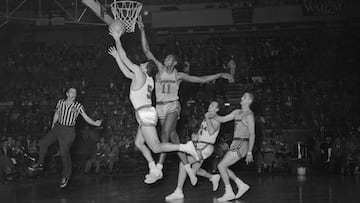

Seventy-five years ago today, the National Basketball Association (NBA) witnessed the debut of Earl Lloyd, a player who “forever changed the game”.
When Lloyd appeared for the Washington Capitols on October 31, 1950, in the team’s season opener against the Rochester Royals, he became the first Black player to take to the court in the NBA.
Lloyd’s NBA debut followed on from the color-barrier-breaking efforts of fellow sports star Jackie Robinson. Three and a half years earlier, Robinson had established himself as the first Black player to feature in Major League Baseball.
What’s more, the trailblazing impact of athletes such as Lloyd and Robinson came against the backdrop of a shift towards desegregation not only in U.S. sports, but across American society as a whole.
In the years that followed Lloyd’s debut, indeed, a growing civil rights movement in the U.S. led to several historic actions by both judges and lawmakers, aimed at racial integration.
These included a landmark Supreme Court ruling against school segregation in 1954 - and, most notably, Congress’s approval of the 1964 Civil Rights Act. The sweeping federal legislation outlawed discrimination in America based on race, color, religion, sex or national origin.
A history-making NBA champ
An All-American college basketball player with West Virginia State, Lloyd was one of three Black players who joined the U.S.’s professional basketball league ahead of the 1950-51 season.
A day after Lloyd’s NBA bow, Chuck Cooper made his debut for the Boston Celtics. On November 4, Nat “Sweetwater” Clifton then suited up for his opening run-out for the New York Knicks.
Lloyd went on to play a total of nine seasons in the NBA, spending most of his career with the Syracuse Nationals - the franchise that later became the Philadelphia 76ers.
It was with the Nationals that Lloyd made yet more league history: in 1955, he and team-mate Jim Tucker became the first Black players to win an NBA title, when they helped Syracuse to a 4-3 championship-series victory over the Fort Wayne Pistons.
“You would often hear the N-word”
Speaking later in life, Lloyd recalled the racist abuse he endured in Indiana during Syracuse‘s Finals triumph, and at basketball arenas elsewhere in the NBA over the course of his career.
“Those fans in Indianapolis, they yell stuff like ‘Go back to Africa’ and I’m telling you, you would often hear the N-word,” he told the 76ers website.
“That was commonplace. There were a lot of people who sat close to you who gave you the blues.”
Lloyd added: “My philosophy was if they weren’t calling you names, you weren’t doing anything. If they were calling you names, you were hurting them.”
A player who averaged 8.4 points, 6.4 rebounds and 1.4 assists across 560 regular-season appearances, Lloyd finished his playing career at the Detroit Pistons at the end of the 50s, before moving into coaching.
In 1971, Lloyd was appointed as the Pistons’ head coach - another milestone moment for the league. The Virginia native became the first non-playing Black head coach of an NBA franchise.
Inducted into the Basketball Hall of Fame in 2003, Lloyd died in February 2015, at the age of 86.
“Historic figure in American history”
Paying tribute to Lloyd in the wake of his death, West Virginia State President Brian Hemphill said: “When Earl stepped out on the court on that fateful date in 1950, this remarkable man rightfully earned his place in the historic civil rights movement and, more important, he opened the door to equality in America.”
Lauding Lloyd as a “a leader, a pioneer, a soldier”, the National Basketball Retired Players Association credited him with “forever chang[ing] the game of basketball”, and added: “Modest and willing to share his story with anyone when asked, Earl offered a vivid window into our nation’s segregated past and personified change in this country.
“A truly historic figure in American history has passed.”
Related stories
Get your game on! Whether you’re into NFL touchdowns, NBA buzzer-beaters, world-class soccer goals, or MLB home runs, our app has it all.
Dive into live coverage, expert insights, breaking news, exclusive videos, and more – plus, stay updated on the latest in current affairs and entertainment. Download now for all-access coverage, right at your fingertips – anytime, anywhere.
Complete your personal details to comment