


The Las Vegas NBA All Star: “A disaster, everyone was horny”
The gambling scandal rocking the NBA should serve as a moment of reflection and a turning point in a story that stretches into David Stern’s tenure.

Just days after the 2007 NBA Finals — a lopsided sweep by the San Antonio Spurs over a young LeBron James and his Cleveland Cavaliers — the FBI dropped a bombshell that rocked the league.
The scandal was massive, the kind that should’ve triggered sweeping reforms to guard against the ever-present lure of sports betting. But here we are, 18 years later, neck-deep in a landscape that’s arguably even murkier. And despite the gravity of recent revelations, there’s little appetite for a hard reset. Why? Because, as always, there’s a mountain of money at stake — and that seems to be what really matters.
Back in 2007, veteran NBA referee Tim Donaghy — who’d been officiating since 1994 — was arrested for illegally betting on games, including ones he personally worked. He pleaded guilty, served 11 months in federal prison, and has since spoken openly about how gambling addiction shattered his moral compass. He also admitted to leveraging insider information — the kind referees, players, agents, and league staff routinely share behind closed doors — to influence bets. The parallels to today’s scandals are hard to ignore.
NBA Commissioner David Stern called it the worst moment of his career — whether as a fan, lawyer, or league executive. In a rare moment of vulnerability, the usually stoic Stern said, “I can’t believe this happened to us.”
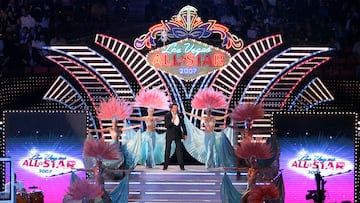
But the seeds of chaos may have been planted months earlier. On February 18, 2007, the NBA held its All-Star Game in Las Vegas — Sin City itself. It was a symbolic move, marking the league’s first official step into the gambling capital of America. Stern had long resisted any association with Vegas, fearing the optics and risks. But relentless lobbying from city officials, especially then-Mayor Oscar Goodman, eventually broke through. Goodman had delivered on promises to boost Vegas’s arts scene and healthcare infrastructure, but his dream of landing a pro sports team had stalled — until that All-Star weekend cracked the door open.
Kobe Bryant All-Star MVP (2007)
— ThrowbackHoops (@ThrowbackHoops) January 20, 2024
31 PTS
6 AST
5 REB
6 STL
54% FG (13/24) pic.twitter.com/vGS2BkOeJQ
From Stern’s reluctance to Vegas mayhem: how the NBA tiptoed into the gambling capital
For years, Las Vegas Mayor Oscar Goodman made regular pilgrimages to NBA headquarters in New York, lobbying Commissioner David Stern to consider bringing a franchise to Sin City. But Stern wouldn’t budge.
“He told me they’d have to kill him before he’d allow a team in a city where sports betting was legal,” Goodman recalled. Still, the mayor managed to strike up a friendship with Stern, even traveling with him to watch basketball games around the world — including a stop in Barcelona.
With help from businessman George Maloof, Goodman eventually pulled off a historic win: the 2007 NBA All-Star Game was held in Las Vegas — the first (and so far only) time the event took place in a city without an NBA franchise.
Christine Zimmerman, a server at the MGM Grand during that wild weekend, remembered the chaos vividly. “Looking back, it’s clear we weren’t ready,” she said. “It was a turning point for Vegas and its relationship with pro sports — the first time things completely spiraled out of control.”
The surge of tourists overwhelmed every forecast. Police were flooded with calls about property damage, public urination, and even a man who fell from a casino parking garage roof.
Maloof, who had warned casino owners to brace for the crowds, didn’t mince words: “I called every casino and told them to take precautions. They didn’t listen. That’s on them.”
It was a mess. Goodman later called it “a disastrous weekend,” admitting, “The game was great, but everything else… let’s just say people were way too horny.” The Western Conference won 153–132, with Kobe Bryant named MVP. Gerald Green took home the Slam Dunk title, and Jason Kapono won the Three-Point Contest.
Behind the scenes, though, things spiraled. Over 400 arrests were made across the Strip. And in a tragic incident outside the Minxx Gentleman’s Club and Lounge, nightclub bouncer Tommy Urbanski was shot and left paralyzed from the waist down. The shooter was reportedly part of NFL player Adam “Pacman” Jones’s entourage.
George Maloof, then co-owner of the Sacramento Kings and a major Vegas businessman, was deeply involved in bringing the NBA to town. Reflecting on the chaos, he said, “There was one really bad night. Not enough police to cover key areas. Everything people say happened — it did. It was a disaster. But we all moved on — the NBA and the city.”
From bans to big business
At the time, Stern wanted nothing to do with a city built on betting. The NBA even banned all wagers related to the All-Star Game that weekend — a rare move meant to preserve the league’s integrity. Vegas business leaders accepted the trade-off, figuring the economic boost from hosting the event would outweigh the temporary loss in gambling revenue.
But just months later, the Donaghy scandal erupted — a stark reminder of how vulnerable pro sports were to the influence of gambling. For decades, leagues treated betting like a corrupting force, a threat to the very idea of fair competition. Without integrity, the whole system collapses — a truth some seem eager to forget.
Today, the landscape has shifted dramatically. Under Commissioner Adam Silver, the NBA has embraced sports betting as an official partner and revenue stream. But critics warn that the league may have underestimated the risks. The money is staggering, and the temptation to cash in is hard to resist. Yet the conflict of interest is glaring: two worlds that should never mix are now walking hand in hand.
Gambling’s long shadow over basketball
The NBA’s uneasy relationship with gambling goes back decades. Take Michael Jordan, for example. Rumors have long swirled around his first retirement in 1993 — with some speculating that gambling debts tied to golf games played a role. Though never proven, the theory remains a fixture of sports conspiracy lore.
Adam Silver’s gamble: how the NBA went all-in on sports betting — and what comes next
In 2012, still serving as commissioner, David Stern stepped into a legal battle in New Jersey that would ultimately pave the way for widespread legalization of sports betting across the U.S. At the time, the major pro leagues — NBA, NFL, MLB, NHL — were fiercely opposed. But years later, they softened their stance, and eventually, they dove in headfirst.
“This could irreparably damage the NBA’s relationship with its fans — now and in the future,” Stern warned. Yet as Adam Silver rose to commissioner, Stern’s tone shifted. And in 2014, Silver made headlines with a bold op-ed in The New York Times, declaring: “Sports betting is illegal in most of the United States. I believe we need a different approach.” That moment marked a seismic shift — one that would define Silver’s tenure.
Today, sports betting is legal in 38 states, plus Washington D.C. and Puerto Rico. The point of no return came in 2018, when the Supreme Court ruled 6–3 to let states regulate betting individually. What followed was a rapid transformation: the leagues went from adversaries to strategic partners.
First, they tried to secure a cut of the profits through state legislation. When that failed, they began integrating their data with sportsbooks — sharing real-time stats and analytics worth millions. Then came the blockbuster deals: in 2018, the NBA named MGM Resorts International its official betting partner — a groundbreaking move for American sports. By 2021, FanDuel and DraftKings were official sponsors, and ESPN teamed up with Penn Entertainment to launch ESPN Bet.
Silver has stood by his philosophy: better to regulate betting openly than let it fester in the shadows. He’s pushed for seamless, in-game betting experiences — intuitive, accessible, and increasingly aggressive.
Just weeks ago, he announced new filters to help viewers block betting content, especially for families concerned about exposing kids to gambling ads during games.
The recent sale of the Dallas Mavericks to the Adelson family — owners of a global gambling empire — underscores the trend. With Texas still resisting legalization, the new owners have floated plans for a combined arena-casino, where fans could watch games and place bets in real time. The message is clear: bet, bet, bet.
Even the NCAA has shifted. Just one day before the FBI’s latest bombshell investigation into the NBA, college sports’ governing body approved betting for players and staff on professional competitions. This comes just months after a betting scandal involving six NCAA basketball teams.
The NBA’s original deal with MGM gave the company access to official league data, team logos, and joint marketing opportunities. In return, MGM reinvested a portion of its betting revenue back into the league. Over the past seven years, these partnerships have grown deeper, more public — and, for many, more dangerous.
"Let's take advantage of this opportunity and do something historic."
— NBA TV (@NBATV) July 31, 2018
Adam Silver announces the NBA's partnership with MGM Resorts International pic.twitter.com/jwcydJe5jI
Now, the question is: what happens next?
The arrest of Terry Rozier — after the NBA had previously cleared him — raises serious doubts about the league’s internal oversight. Was it ignorance, incompetence, or something worse? Rozier, then with the Hornets, left a game in the first quarter with a supposed injury. That absence conveniently aligned with betting predictions that he wouldn’t hit certain stat thresholds. Later, $200,000 in cash was found at his home — allegedly a thank-you for helping manipulate the outcome. He missed the rest of the 2023 season, officially due to injury. But ESPN’s Brian Windhorst isn’t buying it: “Sportsbooks flagged the irregular activity the day it happened. Rozier faked an injury. The NBA benched him to cover it up.”
With players and coaches now facing arrest for trafficking insider information, the league’s image is taking a brutal hit. The FBI has called it a “monumental scandal.” And Silver, before this latest eruption, was already fielding questions about how to shield young fans from the barrage of misleading, gambling-related content — now baked into the NBA experience and just one click away.
If this isn’t the moment for a serious reckoning — one that should’ve come long ago — then maybe we’ve already lost the plot. And maybe, just maybe, we’re only now beginning to realize it.
Related stories
Get your game on! Whether you’re into NFL touchdowns, NBA buzzer-beaters, world-class soccer goals, or MLB home runs, our app has it all.
Dive into live coverage, expert insights, breaking news, exclusive videos, and more – plus, stay updated on the latest in current affairs and entertainment. Download now for all-access coverage, right at your fingertips – anytime, anywhere.
Complete your personal details to comment