


WNBA faces critical deadline as players reject latest offer
The league’s latest offer also fails to satisfy the union. While the figures improve, the conditions remain the same, leaving a shutdown or strike on the cards.
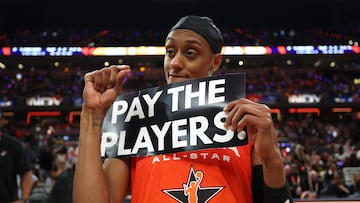
As November draws to a close, the clock is ticking for the WNBA to strike a deal that satisfies both sides — team owners and the players’ union — before the current extension expires on November 30. Without a new collective bargaining agreement, the league risks a shutdown: either a player strike or the dreaded lockout imposed by ownership.
Meanwhile, women’s basketball is evolving fast. Other leagues are expanding opportunities, challenging the WNBA’s traditional model, and reshaping the professional landscape. Thanks to surging media coverage and the rise of individual stars, players now see career paths that didn’t exist just a few years ago. But negotiations remain tense, and the ripple effects reach all the way to NBA Commissioner Adam Silver, since the WNBA still operates largely under the NBA’s umbrella.
Carla Leite took the hit and STILL cashed it!
— WNBA (@WNBA) November 20, 2025
Deep middy turned into an and-1 opportunity coming in at No. 4️⃣🔥#WNBARookiesWeek pic.twitter.com/bQtl2xNVB1
Players reject “too good to refuse” offer
The WNBA recently leaked details of its latest proposal to the press — a strategic move designed to sway public opinion. Headlines highlighted eye-popping numbers: maximum salaries jumping from about $249,000 to $1.1 million, minimum salaries rising from $66,000 to more than $220,000, and average pay surpassing $460,000. The message was clear: How could the players possibly turn this down?
But the union insists the real issue isn’t headline salaries — it’s revenue sharing. Back in October 2024, players exercised their opt-out clause to end the current deal after the 2025 season. Since then, they’ve made one demand crystal clear: a fairer split of league profits.
nobody made more three-pointers this season than Kelsey Mitchell 🎯🔥
— Indiana Fever (@IndianaFever) November 15, 2025
111 3PM, the most she’s ever hit in a single season in her career.#WNBAMilestonesWeek pic.twitter.com/FqnY3PYiY2
What the players want
Contrary to some narratives, WNBA athletes aren’t asking for NBA-level salaries. They’re asking for a system that mirrors the structure of men’s leagues. In the NBA, players and owners split Basketball Related Income (BRI) almost evenly — typically around 50/50. That revenue share determines the salary cap, which in turn drives player salaries.
WNBA players want a similar formula. They argue that with the league’s exponential growth, now is the time to secure a deal that ensures fairness for years to come. For them, it’s “now or never.”
CLARK BACK-TO-BACK-TO-BACK 3s in :33 SECONDS ON ABC 🤯
— WNBA (@WNBA) June 14, 2025
Caitlin just went off for a quick 9 PTS, finishing with 14 PTS in the first Q!
WNBA Commissioner's Cup presented by @coinbase https://t.co/Hij3KSh2V6 pic.twitter.com/U533RgXMmz
The fine print behind the numbers
The WNBA’s $1.1 million figure isn’t a guaranteed base salary. It’s the maximum a player could earn after stacking bonuses, marketing deals arranged by the team, and revenue-sharing payouts that have rarely materialized. In reality, base salaries remain stuck between $800,000 and $850,000.
Performance bonuses are modest:
- $11,356 for winning the championship
- $5,678 for finishing as runner-up
- $15,450 for league MVP
- $10,000 for All-WNBA First Team selections
- $5,150 for Second Team selections
- $2,575 for making the All-Star Game
- $5,150 for All-Star MVP
Marketing deals can add up to $250,000, but many top players avoid them because they conflict with more lucrative personal endorsements.
A season for the HISTORY books.
— WNBA (@WNBA) November 14, 2025
A’ja Wilson became the first player ever to win MVP, Defensive Player of the Year, and Finals MVP in a single season... rewriting what dominance looks like in the WNBA.
This isn’t just a milestone. It’s a blueprint 👑#WNBAMilestonesWeek pic.twitter.com/DKhBtWw422
Why the union says “No”
Under the current system, players only share in profits once league revenue grows by at least 20% — a threshold that has been difficult to reach since the pandemic disrupted 2020 earnings. As a result, players’ share of WNBA revenue remains shockingly low. In 2022, according to Bloomberg, salaries accounted for just 9.3% of total league income.
That imbalance persists even as the WNBA’s business booms. Deloitte reports revenue jumped from $710 million in 2024 to more than $1 billion in 2025. Yet player salaries have only grown about 3% annually.
For the union, the math is simple: bigger numbers don’t equal fairness if the system itself is broken. Accepting the current offer would lock in inequities for years to come. So, once again, the players said no.
It only makes sense to start off the rook's week with her preseason debut 👌
— Las Vegas Aces (@LVAces) November 17, 2025
5/2 vs. DAL
17 PTS
5 3PM@aaliyah_nye // #AcesPlayerProfile pic.twitter.com/ye3EtXsDkg
Deadline approaching
With less than two weeks until the November 30 deadline, the WNBA faces a defining moment. Will ownership agree to a revenue-sharing model that reflects the league’s growth, or will the players hold firm and risk a lockout?
Either way, the outcome will shape the future of women’s basketball — not just in the US, but globally.
Related stories
Get your game on! Whether you’re into NFL touchdowns, NBA buzzer-beaters, world-class soccer goals, or MLB home runs, our app has it all.
Dive into live coverage, expert insights, breaking news, exclusive videos, and more – plus, stay updated on the latest in current affairs and entertainment. Download now for all-access coverage, right at your fingertips – anytime, anywhere.
Complete your personal details to comment