


Is the Pro Bowl officially meaningless? What this year’s withdrawals really say
The NFL’s Pro Bowl Games don’t just look different in format this year, but in quality of players as well. Has the event lost its “honor”?
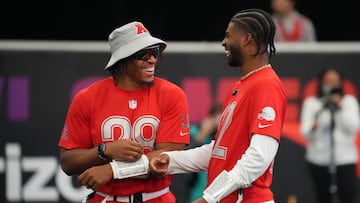

The NFL has spent years trying to fix the Pro Bowl. They moved it out of Hawaii. They eliminated full-contact football. They turned it into a flag football showcase. They added skills competitions, celebrity coaches, and Olympic buzz.
And yet, heading into Super Bowl week, the most telling storyline around the Pro Bowl Games isn’t who made the roster...it’s who isn’t bothering to show up.
You’ll NEVER guess which QB made the Pro Bowl this season pic.twitter.com/5Q1rl5r89Y
— NFL Memes (@NFLMemes) January 27, 2026
Pro Bowl by the numbers: who declined, who replaced them, and what it means
By the time Super Bowl week arrived, the Pro Bowl rosters had already undergone significant turnover. As expected, players from the Patriots and Seahawks were unavailable, removing several marquee names from the original lineup before the event even began.
Chris Jones (Chiefs), a seven-time Pro Bowler, was selected to the 2026 Pro Bowl Games but quietly opted out this year despite not being in the Super Bowl. His absence followed teammate Travis Kelce’s decision to skip the event, and reporters noted that Jones didn’t participate and didn’t provide much detail beyond team announcements, signaling a shift in how top players treat the honor.
Chris Jones on making the AFC’s 2026 Pro Bowl team:
— KC Sports Network (@KCSportsNetwork) December 23, 2025
“None of it really matters. I play to win rings, man… it’s never been my goal to make Pro Bowls.”
Adds: “I missed the Pro Bowl with 15.5 sacks, so it just shows you how the Pro Bowl is.” pic.twitter.com/68TQlt1vRA
Quinn Meinerz (Broncos) was on the initial Pro Bowl roster and expected to attend, but withdrew citing “personal reasons” and did not elaborate further on his decision. For a player who was one of Denver’s standout offensive linemen this season, the lack of a detailed explanation is notable.
Several players, including Chargers offensive tackle Joe Alt, Colts guard Quenton Nelson, Browns defensive end Myles Garrett, Raiders defensive end Maxx Crosby, Buccaneers tackle Tristan Wirfs, Packers defensive end Micah Parsons, Eagles defensive tackle Jalen Carter, and Seahawks defensive tackle Leonard Williams, were listed as not participating without specific injury or Super Bowl conflict explanations documented.
Every Pro Bowl comes with opt-outs. That part isn’t new. What is new is how casually many of those declines are happening each year, and how often replacement spots are going unfilled or barely acknowledged. In several cases this year, players declined Pro Bowl invitations without public explanations, and teams didn’t exactly rush to promote the replacements. The silence speaks volumes.
For an event once marketed as a career milestone, participation increasingly feels optional. Or worse, irrelevant. Being named a Pro Bowler used to be a big part of a player’s legacy. It helped them gain leverage in contracts and boost their future Hall of Fame potential.
Today, many players treat it like a nuisance at the worst possible time. especially with Super Bowl week, offseason training, and recovery all on the horizon.
For players whose teams fell short of the postseason, the Pro Bowl no longer seems like a consolation prize. For players in the Super Bowl, it’s a scheduling conflict. And for veterans, it’s often just another event with more downside than upside.
Flag football fixed the hits, but not the motivation
The NFL deserves credit for acknowledging that fans didn’t want to watch half-speed tackling exhibitions. Flag football made the Pro Bowl safer, faster, and more visually appealing. But it didn’t fix the core issue, which is that the players don’t feel emotionally invested.
The NFL is using the terrible flag football Pro Bowl game as a gateway drug to a feminized version of football they’re hoping to sell. They have no respect for fans, and why should they? They feed us slop and we eat it right up. pic.twitter.com/EEVbPcxJQ6
— Jason Whitlock (@WhitlockJason) January 28, 2026
Without real stakes, whether competitive, financial, or legacy-based, the Pro Bowl Games struggle to command attention from the very stars meant to carry it. Even with Olympic aspirations for flag football on the horizon, many elite players still see Pro Bowl week as something to politely decline rather than eagerly accept.
What this means for the Pro Bowl’s future
The Pro Bowl isn’t going away. It still draws viewers, sponsors, and younger fans. But the identity of the event is clearly shifting. It’s no longer an All-Star game in the traditional sense. It’s closer to a TV-friendly exhibition, branding opportunity, and Super Bowl-week sideshow.
And judging by this year’s withdrawals and half-filled narratives, the league may need to decide whether it wants to keep calling it an “honor” or fully embrace it as entertainment. Because right now, the most honest reaction from many NFL stars is simply "no thanks“.
Related stories
Get your game on! Whether you’re into NFL touchdowns, NBA buzzer-beaters, world-class soccer goals, or MLB home runs, our app has it all.
Dive into live coverage, expert insights, breaking news, exclusive videos, and more – plus, stay updated on the latest in current affairs and entertainment. Download now for all-access coverage, right at your fingertips – anytime, anywhere.
Complete your personal details to comment