



Levi’s Stadium gets ready for Super Bowl amid growing conspiracy theory
Ahead of Sunday’s clash between the Patriots and the Seahawks, AS visited Levi’s Stadium - an arena that’s the focus of a wild rumor.
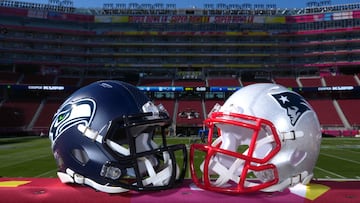
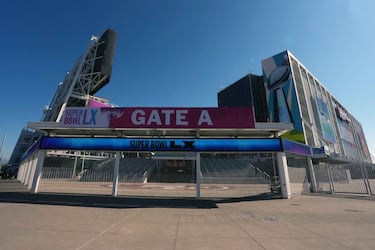
Despite the fact that this 60th edition of the Super Bowl has its nerve center in San Francisco, the real action - the game itself - is taking place nearly an hour and a half from downtown. Levi’s Stadium, home of the San Francisco 49ers and host of this year’s NFL championship, sits in Santa Clara, a satellite city roughly 40 miles from the heart of the metro area and notoriously difficult to reach thanks to the region’s dense traffic. AS experienced it firsthand on Wednesday during a visit that offered an inside look at the stadium where the New England Patriots and Seattle Seahawks will battle for the Lombardi Trophy on Sunday — a venue that has also, somewhat bizarrely, become the focus of a growing conspiracy theory.
Super Bowl venue primed for Lombardi Trophy tussle
Opened in 2014 after a construction project that cost around $1.2 billion, the stadium has always carried the name of the iconic denim brand headquartered in San Francisco. It’s also one of the host venues for this year’s FIFA World Cup. The move to this state‑of‑the‑art building ended a more‑than‑50‑year run for the 49ers at Candlestick Park, the franchise’s namesake home within San Francisco city limits, which was demolished in 2015. Ahead of the Super Bowl, Levi’s Stadium has undergone a major facelift: every trace of the 49ers has been removed - including the team’s grass surface, with 7,400 square meters replaced by turf installed by the NFL - and the venue is now fully dressed in the colors of the championship game, as well as those of the Patriots and Seahawks, who happen to share a similar palette.
“We’ve been working on the stadium for the past five weeks, ever since the 49ers played their last game here,” members of the game‑operations team told AS during the tour. “Everything has been planned two and a half years in advance,” they explained, without disclosing the financial costs of such a transformation. Under the NFL’s contracts with Super Bowl host venues, the league requires exclusive control of the stadium for 54 days (30 before the game and 24 after) and access to 35,000 parking spots within a one‑mile radius. The NFL keeps 100% of ticket revenue, receives more than 70 luxury suites free of charge, and pays zero taxes on its earnings. A dream arrangement - at least for the league.
The biggest logistical challenge, according to organizers, has been accommodating the massive media footprint: reporters, TV crews, and more - far beyond what a normal 49ers game requires. As a result, two open corners of the stadium are being filled with temporary structures, and instead of the more than 68,000 fans who attend a typical game, capacity for the Super Bowl will be trimmed to “only” 65,000. Outside, a large security perimeter will surround the venue (police helicopters circled nonstop during AS’s visit), and once through it, fans will enter a sprawling fan zone filled with activities, shops, and even concerts leading up to kickoff.
Organizers warn that spectators will need plenty of “patience” for several reasons: long waits due to strict security screenings and slow traffic approaching the stadium among them. That’s why there’s a full‑on campaign encouraging fans to use public transportation.
Seattle Seahawks vs New England Patriots live: Super Bowl LX
A power station that’s raising eyebrows
In the middle of all this Super Bowl buzz, Levi’s Stadium is also making headlines for something as peculiar as it is far‑fetched. Adjacent to the complex lies the 49ers’ daily training facility, and right next to that sits an electrical substation that has been there since the team moved to Santa Clara. Since 2014, the 49ers have played 12 NFL regular seasons - and in 11 of them, they’ve finished in the top ten in terms of injuries. This year alone, they lost stars like Nick Bosa and George Kittle to serious injuries, and in several seasons their championship hopes have unraveled under the weight of physical setbacks.
Some chalk it up to bad luck. Others point fingers at Kyle Shanahan’s training methods. And on social media, an unusual theory has emerged: that the substation’s electromagnetic fields could be weakening players’ bodies, making them more prone to injury. Some experts dismissed the idea immediately; others didn’t rule it out entirely. Players like Christian McCaffrey have publicly acknowledged their concern, and two weeks ago, the 49ers launched an investigation to determine whether the theory holds any merit.
“Because it deals with the health and safety of our players, you have to look into everything,” said John Lynch, the franchise’s general manager. “Our guys have been looking into it. We’ve been reaching out to anyone and everyone to see if a study exists. The health and safety of our players is of the utmost priority to us. We pour into it. We’re not going to turn a blind eye to it. We’ll look into everything.”
Whatever the findings turn out to be, one thing seems certain: this Super Bowl at Levi’s Stadium is bound to be an electric event.
Related stories


Get your game on! Whether you’re into NFL touchdowns, NBA buzzer-beaters, world-class soccer goals, or MLB home runs, our app has it all.
Dive into live coverage, expert insights, breaking news, exclusive videos, and more – plus, stay updated on the latest in current affairs and entertainment. Download now for all-access coverage, right at your fingertips – anytime, anywhere.
Complete your personal details to comment