


Ukrainian athlete banned from Winter Olympics for helmet message
Skeleton athlete Vladyslav Heraskevych has been pulled from his event by the International Olympic Committee.
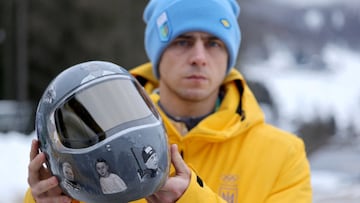

Ukrainian athlete Vladyslav Heraskevych will not take part in the skeleton event at the 2026 Winter Olympics after the International Olympic Committee (IOC) ruled that his helmet violated rules on political statements.
Heraskevych has trained using a helmet that honors more than 20 Ukrainian athletes and coaches that have been killed since the Russian invasion in 2022. The helmet shows the faces of those victims, pictured in black and white on a grey background. The decision to ban Heraskevych came just 45 minutes before the start of the skeleton competition.
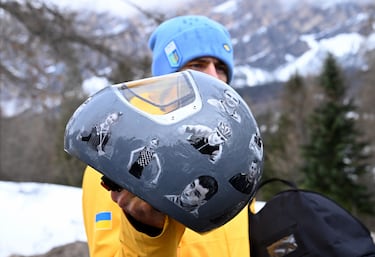
The Ukrainian athlete had known that he risked a ban but has insisted that he is “not violating any rules” by paying tribute to the victims of the war. Heraskevych said: “I would say [it’s] painful that it really looks like discrimination because many athletes already were expressing themselves. ... They didn’t face the same things. So suddenly just the Ukrainian athlete in this Olympic Games will be disqualified for the helmet.”
The International Bobsled and Skeleton Federation has argued that the helmet was “inconsistent with the Olympic Charter and Guidelines on Athlete Expression” which governs what can be worn during competition. He had been allowed to wear the helmet during training and display it while away from the ice, but was required to wear a different helmet during races.
He had been in contact with the IOC for the last three days, leading up to a terse meeting with IOC president Kirsty Coventry at 8:15am on Thursday morning. Within ten minutes it was clear that a compromise could not be found and Heraskevych was officially disqualified from the competition.
“As you’ve all seen over the last few days, we’ve allowed for Vladyslav to use his helmet in training,” Coventry said once the news had been announced. “No one, no one, especially me, is disagreeing with the messaging. The messaging is a powerful message. It’s a message of remembrance, it’s a message of memory, and no one is disagreeing with that. The challenge that we are facing is that we wanted to ask or come up with a solution for just the field of play.”
Heraskevych has said that he plans to appeal the decision at the Court of Arbitration for Sport but his attempts will have no bearing on his Olympic dreams. The skeleton racing began on Thursday and will conclude on Friday, meaning that the Ukrainian’s hopes of representing his nation at this year’s Winter Olympics have been ended.
Related stories
Get your game on! Whether you’re into NFL touchdowns, NBA buzzer-beaters, world-class soccer goals, or MLB home runs, our app has it all.
Dive into live coverage, expert insights, breaking news, exclusive videos, and more – plus, stay updated on the latest in current affairs and entertainment. Download now for all-access coverage, right at your fingertips – anytime, anywhere.
Complete your personal details to comment