


F1’s 2026 cars don’t just change the rules — they change the entire driving philosophy
Excessive management hasn’t won over the drivers, but the new regulations are attracting more manufacturers than ever. The verdict will come in Australia.
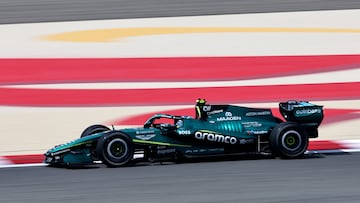

What’s coming in Formula 1 for 2026 isn’t just a rule tweak; it’s a full‑blown paradigm shift. The new generation of cars dramatically changes how drivers must push to find the limit.
On one side, the redesigned chassis slashes aerodynamic grip by eliminating ground‑effect downforce. On the other, the new hybrid power units will deliver 50% electric power, pushing total output toward 1,000 horsepower. But there’s a catch: to unleash that 350‑kilowatt electric boost on the straights, drivers must regenerate massive amounts of energy in every single corner.
That means braking zones and corner speeds must be compromised to keep enough energy for the straights. And while fans might not notice the difference between taking a corner at 155 mph versus 125 mph, the drivers feel it immediately — and many say they no longer need to push anywhere near the limit.
Week 2️⃣ of Pre-Season Testing in Bahrain awaits 🤩👀#F1 #F1Testing pic.twitter.com/afN4dAiEEA
— Formula 1 (@F1) February 16, 2026
Not everything is negative — but most drivers aren’t happy
The initial punch of power at the start of each straight has impressed several drivers, especially during the brief moments when the electric motor delivers its full hit. And the new dual‑DRS system — called “Straight Line Mode” (SLM) — helps the cars reach respectable top speeds.
But nearly every driver has frowned when describing the new sensations. And the harshest critics are the sport’s biggest champions.
Lewis Hamilton didn’t sugarcoat it: “The car has way less downforce, it’s shorter and lighter, it’s kind of fun — like a rally car. Right now we’re slower than a GP2 car, right? That’s what it feels like.”
He added: “No fan is going to understand the level of energy management. It’s ridiculous how complex it is. You basically need a college degree.”
Fernando Alonso pointed to Bahrain’s Turn 12 as the perfect example: “Before, you’d trim downforce until you could take it flat. Driver skill made the difference. Now we’re 30 mph slower because we don’t want to waste energy we’ll need on the straight. If you take Turn 12 at 125 mph instead of 160, even the team chef could drive it at that speed.”
Max's week is complete ✅
— Oracle Red Bull Racing (@redbullracing) February 13, 2026
MV3 completed 61 laps in the morning session 👊#F1 || #F1Testing 🇧🇭 pic.twitter.com/4DOloLWTPg
Verstappen delivers the harshest verdict
Max Verstappen didn’t hold back: “This isn’t F1 — it’s Formula E on steroids. I like the livery, the car looks great, the proportions are good. That’s not the issue. Everything else is way too anti‑racing.”
The reigning superstar even hinted he might walk away early: “I don’t care if the car goes 220 mph or 185. I want to drive normally, the way it should be, without lifting early or shifting up or down just to manage energy. My future? At this point in my career, I don’t want a winning car — I want a fun car. So we’ll see.”
Why change something that was working?
It’s a fair question. The FIA wanted engines that reflect technology relevant to the auto industry: 50% hybrid power, plus fully synthetic, sustainable fuel. The complex MGU‑H — which harvested energy from the turbo — has been removed, and the MGU‑K’s contribution has been tripled, making braking recovery the centerpiece of the system.
This was the only way to attract major manufacturers like Ford (via Red Bull), Audi, and Honda, alongside Mercedes and Ferrari — the five engine builders. And they’re not alone. Iconic sports‑car brands like McLaren and Aston Martin are on board, and big automakers such as Cadillac, Renault (Alpine), and Toyota (sponsor of Haas) are also tied to the new era. Williams is now the only fully independent team left.
The desert colours. 😮💨#AMR26 pic.twitter.com/hraSCV8YDM
— Aston Martin Aramco F1 Team (@AstonMartinF1) February 15, 2026
What happens next?
In the short term, options are limited. The FIA will adjust engine parameters track by track to keep performance consistent. Power units will naturally improve between 2026 and 2030 as teams develop them. Drivers will have to manage energy not only in races but also in qualifying laps.
Their opinions are loud and clear — but the real test will come after the Australian Grand Prix. If fans see a tight fight for the lead all the way to the final laps, the complaints may fade. But if one team dominates, the paddock will once again whisper about the return of the loud, simple, thrilling V8s — irrelevant to modern carmakers, but beloved by purists.
Related stories
Get your game on! Whether you’re into NFL touchdowns, NBA buzzer-beaters, world-class soccer goals, or MLB home runs, our app has it all.
Dive into live coverage, expert insights, breaking news, exclusive videos, and more – plus, stay updated on the latest in current affairs and entertainment.Download now for all-access coverage, right at your fingertips – anytime, anywhere.
Complete your personal details to comment