


Goodbye DRS: how active aerodynamics will change overtaking in 2026
The FIA presents the next technical regulations: narrower and lighter cars, an electric DRS system and movable wings to reduce drag.
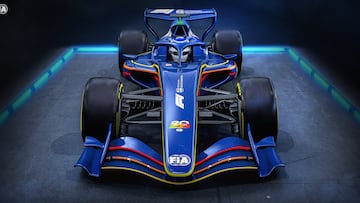
Formula 1 has officially unveiled the sweeping rule changes coming in 2026, and they mark one of the sport’s biggest technical overhauls in years.
Cars will be up to 30 kilograms (66 pounds) lighter, noticeably shorter and narrower, and far more agile. The headline change: the introduction of active aerodynamics, a system that will fundamentally reshape how cars behave on track.
The power units are also being simplified. The MGU‑H—long considered one of the most complex components—will be removed, while battery output will increase significantly.
Battling all the way through the pack in 2025 ⚔️
— Formula 1 (@F1) December 31, 2025
Relive some of the best battles from this year on our YouTube channel! 📺#F1
The goal is to attract and support a record six engine manufacturers: Ferrari, Mercedes, Renault, Honda, Red Bull Ford, and Audi. All will run on fully sustainable fuels.
Next‑generation cars will be “lightweight, extremely fast, and agile cars, but also at the forefront of technology,” said Nicholas Tombazis, the FIA’s head of single‑seater matters.
F1 CEO Stefano Domenicali added, “We’re entering this regulatory cycle from the strongest position we’ve ever had. I trust the FIA’s work to keep pushing our sport forward.” Teams have been developing their 2026 cars since January 1, 2025.
Unveiling the face of the 2026 FIA Formula 1 car✨
— FIA (@fia) June 6, 2024
Get all the info on https://t.co/YvBCxoPWnQ#FIA @F1 pic.twitter.com/FeKkCLujEz
How active aerodynamics will work
This is the biggest innovation of the new rulebook. Cars will feature movable aerodynamic elements on both the front and rear wings. Similar to today’s DRS, these systems can be activated on every straight — in qualifying and in the race — regardless of whether a driver is following another car.
Two configurations will coexist:
- Cornering mode: higher downforce with active aero engaged
- Straight‑line mode: wings “open” to reduce drag and boost top speed
The floor has also been simplified to reduce ground‑effect sensitivity and prevent the ultra‑stiff, ultra‑low setups that have caused performance gaps and porpoising issues in recent seasons. The FIA has also redesigned front‑wing endplates after discovering several loopholes teams had exploited.
A new version of DRS
Because the traditional DRS will now be used permanently as part of the aero system, F1 is introducing a separate overtaking aid inspired by IndyCar and Formula E. Called “overtake mode,” it works like a push‑to‑pass system: the chasing driver receives an extra burst of battery power. The amount of energy available will vary depending on the circuit.
Formula 1 and the @fia have today revealed the 2026 Technical Regulations.
— F1 Media (@F1Media) December 17, 2025
2026 will see both the chassis and power units updated, in the biggest overhaul of regulations in the sport’s history. These changes will shake up the order and create new excitement, while delivering… pic.twitter.com/zRxRl0sI4f
Power unit overhaul
Originally announced in August 2022, the 2026 engines will feature a major power rebalance:
- Combustion engine output drops from 550 kW to 400 kW
- Battery output increases from 120 kW to 350 kW
This brings the thermal and electric components much closer to a 50/50 split.
The MGU‑H is gone entirely. Only the MGU‑K remains, recovering energy under braking. Cars will be able to harvest up to 8.5 MJ per lap, double the current amount. All teams will run on fully sustainable fuels.
Related stories
Get your game on! Whether you’re into NFL touchdowns, NBA buzzer-beaters, world-class soccer goals, or MLB home runs, our app has it all.
Dive into live coverage, expert insights, breaking news, exclusive videos, and more – plus, stay updated on the latest in current affairs and entertainment. Download now for all-access coverage, right at your fingertips – anytime, anywhere.
Complete your personal details to comment