


Is it worth hosting the 2030 World Cup? “Millions are at stake”
The withdrawal of Málaga and A Coruña are at odds with Valencia and Vigo’s attempts of to host the tournament.

As planning for the 2030 World Cup moves into a decisive phase, the spotlight is now on Spain’s shifting list of host‑city candidates. The withdrawals of Málaga and, more recently, A Coruña — along with earlier exits by Gijón and Murcia — have sparked debate over whether the costs and requirements of hosting World Cup matches are actually worth it.
Much of the discussion comes down to perspective: whether cities can shoulder the short‑term investment in exchange for long‑term economic payoff. “Every city has its own circumstances, but the key is having a clear project supported by all parties — local government, national authorities, and the home club,” sources familiar with the process told AS. In both A Coruña and Málaga, the impact on the local team’s operations was a major reason for stepping aside, though not the only one.
In A Coruña, the hospitality sector criticized the decision as a “lost opportunity,” arguing the city had passed up a chance to attract international tourism. Others agreed with Mayor Inés Rey, who urged “keeping our feet on the ground.” Still, some wonder whether, four years from now, the city will regret missing out on what many consider a major economic engine — and one of the strongest global showcases for Spain.
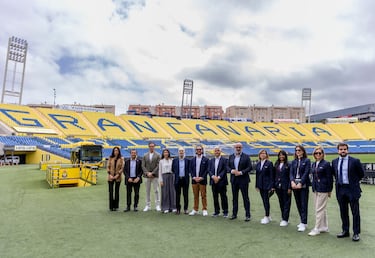
Rafael Louzán, president of the Royal Spanish Football Federation, insists the country must seize the moment. “Spain and Spaniards will benefit from this opportunity,” he said, citing a comprehensive economic‑impact study commissioned from PwC. The numbers are striking: the World Cup is projected to generate roughly $5.4 billion in GDP impact, create more than 90,000 jobs (including 56,000 direct positions and over 9,000 for workers under 24), attract more than $4 billion in tourism spending, produce $2 billion in tax revenue, draw over $1 billion in foreign investment, and spur around $2.7 billion in infrastructure investment. “This will leave a legacy,” organizers repeat.
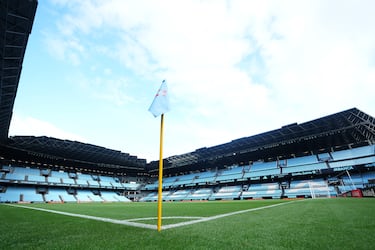
Despite the withdrawals, two cities are still fighting hard to get in. Valencia appears almost guaranteed a spot, while Vigo — led by its outspoken mayor, Abel Caballero — is pushing aggressively to replace A Coruña. To make the cut, Vigo’s Balaídos stadium needs a major renovation, which local authorities say they are ready to deliver, confident the investment will pay off. For Vigo, the World Cup is seen as a once‑in‑a‑generation opportunity.
Studies from previous tournaments show how transformative a World Cup can be for mid‑sized cities. While major hubs like Madrid or Barcelona already host large‑scale events, smaller cities often see a multiplied impact. After the 2006 World Cup in Germany — the last held entirely in Europe — post‑event analyses showed that Leipzig, for example, enjoyed greater proportional benefits than Berlin or Munich.
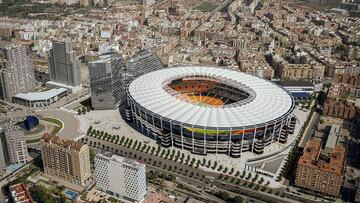
Valencia’s situation is different. With the Nou Mestalla expected to be one of Spain’s most modern stadiums by 2030, the city and the tournament seem to need each other equally. Local business leaders are enthusiastic. “Valencia is already one of Europe’s top destinations, so its tourism future doesn’t hinge on this World Cup,” said Nuria Montes, secretary general of Hosbec, the Valencian hotel and tourism association. “But it is a chance to reach distant markets — Asia, the Middle East, North America — and could accelerate long‑delayed airport expansion plans.”
“The investment will have economic and social impact”
What is clear, Montes adds, is that “public investment will absolutely have an economic and social return.” If Valencia is ultimately selected, she believes the World Cup would be a major boost for the tourism sector she represents. Vigo, meanwhile, estimates that hosting matches would generate massive economic activity even in the days leading up to each game — helped by its strategic location near Portugal, one of Spain’s co‑hosts. Business leaders from Spain, Morocco, and Portugal are already meeting to coordinate efforts ahead of 2030.
With four years to go, the 2030 World Cup is widely seen as a huge opportunity for urban development, business growth, and economic expansion — not just for host cities but for surrounding regions as well. The risks are real, and success depends on solid planning to ensure every euro invested multiplies in return. Spain’s second World Cup is a “historic opportunity”… but only if every stakeholder has a clear, viable strategy to make it pay off.
Related stories
Get closer to the game! Whether you like your soccer of the European variety or that on this side of the pond, our AS USA app has it all. Dive into live coverage, expert insights, breaking news, exclusive videos, and more. Plus, stay updated on NFL, NBA and all other big sports stories as well as the latest in current affairs and entertainment. Download now for all-access coverage, right at your fingertips – anytime, anywhere.
And there’s more: check out our TikTok and Instagram reels for bite-sized visual takes on all the biggest soccer news and insights.
Complete your personal details to comment